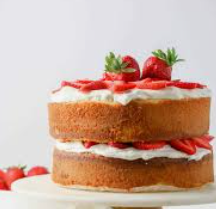
Vanilla Sponge Cake
A light, fluffy, timeless classic
Introduction
The vanilla sponge cake is one of the most beloved cakes in the world. Simple in ingredients yet elegant in texture and flavor, it is the foundation of countless desserts: layered cakes, birthday cakes, trifles, roulades, and afternoon treats. What makes a sponge cake special is its lightness—soft, airy crumbs that melt in your mouth, achieved through proper mixing and gentle handling rather than heavy fats.
This recipe focuses on a classic vanilla sponge cake with a delicate crumb, subtle sweetness, and pure vanilla aroma. It is versatile, reliable, and perfect on its own or paired with cream, fruit, or frosting.
🧺 Ingredients (serves 8–10)
- 4 large eggs, at room temperature
- 120 g (½ cup + 2 tbsp) granulated sugar
- 120 g (1 cup) all-purpose flour
- 1 teaspoon vanilla extract
- 1 teaspoon baking powder
- ¼ teaspoon salt
- 30 g (2 tbsp) unsalted butter, melted and cooled (optional but recommended)
- 2 tablespoons milk (optional, for extra moisture)
🔧 Equipment
- 20 cm (8-inch) round cake pan
- Parchment paper
- Mixing bowls
- Electric mixer or whisk
- Rubber spatula
- Fine sieve
- Cooling rack
🔪 Step-by-Step Preparation
1. Prepare the oven and pan
Preheat your oven to 170°C (340°F). Grease the cake pan lightly with butter and line the bottom with parchment paper. This ensures easy removal and prevents sticking without weighing the cake down with excess fat.
2. Separate and prepare the eggs
Separate the egg yolks from the whites, placing them in two clean, dry bowls. Egg whites whip best when there is no trace of fat or yolk.
Add half of the sugar to the yolks and whisk until pale, thick, and creamy. This process incorporates air and dissolves the sugar, creating a stable base for the batter. Stir in the vanilla extract.
3. Whip the egg whites
Add the salt to the egg whites and begin whipping at medium speed. Once they become foamy, gradually add the remaining sugar while continuing to beat.
Whip until soft to medium peaks form. The whites should be glossy and hold their shape but still look supple—not dry or grainy. Over-whipping will cause the sponge to collapse.
4. Combine yolks and whites
Gently fold one-third of the whipped egg whites into the yolk mixture. This step loosens the batter, making it easier to fold in the rest without deflating it.
Add the remaining egg whites in two additions, folding carefully with a spatula using a bottom-to-top motion. Take your time—this step is crucial for a light sponge.
5. Add dry ingredients
Sift the flour and baking powder together. Sifting removes lumps and adds air, which improves the cake’s texture.
Sprinkle the dry ingredients over the batter in two additions, folding gently after each. Avoid stirring or pressing down, as this would knock out the air.
6. Incorporate butter and milk (optional)
If using butter and milk, mix them together and gently fold into the batter. This adds moisture and a slightly richer flavor while keeping the cake light.
7. Bake the cake
Pour the batter into the prepared pan and smooth the top lightly. Tap the pan gently on the counter to release large air bubbles.
Bake for 25–30 minutes, until the cake is golden, springs back when touched, and a toothpick inserted in the center comes out clean.
Avoid opening the oven during the first 20 minutes, as sudden temperature changes can cause the sponge to collapse.
8. Cool properly
Remove the cake from the oven and let it cool in the pan for 10 minutes. Then turn it out onto a wire rack and peel off the parchment paper.
Allow the cake to cool completely before slicing or decorating.
🍽️ Serving Ideas
This vanilla sponge cake is incredibly versatile. Serve it:
- Plain with a dusting of powdered sugar
- Layered with whipped cream and fresh berries
- Filled with jam or lemon curd
- Frosted with buttercream or cream cheese icing
- Used as a base for birthday or celebration cakes
🌿 Variations
Lemon sponge
Replace vanilla with lemon zest and add 1 tablespoon lemon juice.
Chocolate sponge
Replace 20 g of flour with cocoa powder.
Vanilla-orange sponge
Add orange zest for a warm citrus note.
Dairy-free version
Skip butter and milk—the sponge will still be beautifully light.
💡 Expert Tips for Success
- Use room-temperature eggs for maximum volume.
- Always fold gently, never stir.
- Do not overbake—the sponge should remain soft and elastic.
- If your sponge sinks, it may be due to underbaking or over-whipped egg whites.
- For slicing layers, chill the cake for 30 minutes first.
🥄 Storage
- Store at room temperature, wrapped, for up to 2 days
- Refrigerate if filled with cream
- Freeze plain sponge layers for up to 2 months
🌟 Conclusion
The vanilla sponge cake is a true baking essential—simple, elegant, and endlessly adaptable. Mastering this recipe gives you a foundation for countless desserts, from everyday treats to special celebrations. Light as air, delicately sweet, and infused with vanilla, this sponge cake proves that sometimes the simplest recipes are the most rewarding.