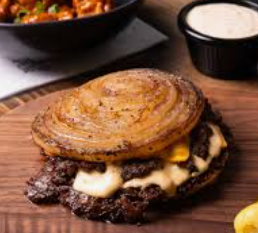
Flying Dutchman Burger
A Bunless, Bold, and Iconic Double-Cheese Burger
Introduction
The Flying Dutchman Burger is a cult favorite among burger lovers who appreciate simplicity done right. Originally popularized by In-N-Out Burger, this minimalist creation strips the burger down to its most essential elements: two juicy beef patties and two slices of melted cheese, with optional grilled onions. No bun. No distractions. Just pure beefy indulgence.
Despite its simplicity, the Flying Dutchman is all about technique. When done properly, it delivers incredible flavor, a rich crust on the beef, perfectly melted cheese, and a juicy interior. It’s also naturally low-carb and gluten-free, making it popular among keto and paleo eaters—though anyone who loves burgers will appreciate its bold, unapologetic character.
This recipe recreates the Flying Dutchman at home with professional tips to achieve that iconic fast-food-meets-gourmet experience.
Ingredients (Serves 2)
For the burgers
- 450 g (1 lb) ground beef (80/20 lean-to-fat ratio recommended)
- 4 slices American cheese (or mild cheddar for a stronger flavor)
- Salt (preferably kosher salt)
- Freshly ground black pepper
Optional classic additions
- 1 large onion (yellow or white)
- 1 tablespoon butter or beef fat
- Mustard (yellow, optional)
- Pickle slices (optional, served on the side)
- Burger sauce or spread (optional, for dipping)
Choosing the Right Beef
The Flying Dutchman relies entirely on the quality of the beef. Choose freshly ground beef with at least 20% fat. Fat is flavor, and it also keeps the patties juicy during the high-heat cooking process.
Avoid overly lean beef, which can result in dry patties. If possible, ask your butcher for freshly ground chuck or grind your own at home.
Preparing the Patties
Divide the beef into four equal portions, about 110 g (4 oz) each. Roll each portion gently into a loose ball—do not overwork the meat, as this can make the burgers tough.
Flatten each ball into a thin patty, slightly wider than your palm. The patties should be relatively thin, as Flying Dutchman burgers are traditionally cooked smash-style.
Season only the outside of the patties generously with salt and pepper just before cooking.
Caramelizing the Onions (Optional but Recommended)
While onions are optional, they elevate the Flying Dutchman tremendously.
Slice the onion into thick rings. Heat a skillet over medium heat and add the butter. Place the onion slices in the pan and cook slowly for 15–20 minutes, turning occasionally, until deeply golden, soft, and sweet.
Season lightly with salt and set aside.
Cooking the Patties
Heat a cast-iron skillet or flat griddle over high heat until very hot. No oil is necessary—the beef fat will render naturally.
Place two patties into the pan and immediately press them down firmly with a spatula to create a good crust. Cook undisturbed for 2–3 minutes until a deep brown crust forms.
Flip the patties and immediately place a slice of cheese on each one. Cook for another 1–2 minutes, until the cheese is fully melted and the beef is cooked to medium or medium-well.
Repeat with the remaining two patties.
Melting the Cheese Perfectly
To achieve that classic, gooey cheese melt, cover the skillet briefly with a lid or metal bowl for the last 30 seconds of cooking. The trapped steam melts the cheese evenly without overcooking the meat.
Assembling the Flying Dutchman
Place one cheesy patty on a plate. Add a layer of grilled onions if using. Stack the second cheesy patty directly on top, cheese-side down, creating a molten cheese layer between the two patties.
The result should be a compact, juicy, cheese-laden burger stack.
Texture and Flavor Profile
A properly made Flying Dutchman Burger should deliver:
- A crisp, caramelized crust on the outside
- A juicy, beefy interior
- Melted cheese that binds the patties together
- A rich, savory flavor with no need for bread
Each bite is intense, satisfying, and unapologetically indulgent.
Optional Variations
Protein-Style Flying Dutchman
Wrap the burger in crisp iceberg lettuce for a bit of crunch without adding carbs.
Mustard-Grilled Version
Spread a thin layer of yellow mustard on one side of each patty before cooking. This creates a tangy crust reminiscent of West Coast burger joints.
Spicy Flying Dutchman
Add sliced jalapeños or a dash of hot sauce between the patties.
Gourmet Version
Use aged cheddar or Gruyère and finish with sautéed mushrooms.
Serving Suggestions
Serve the Flying Dutchman with:
- Animal-style fries
- Sweet potato fries
- Coleslaw
- Pickles and mustard
- A cold soda or milkshake for authenticity
Since there’s no bun, this burger pairs beautifully with crunchy sides.
Storage and Reheating
Flying Dutchman burgers are best enjoyed fresh. However, leftovers can be stored in the refrigerator for up to 2 days.
Reheat gently in a skillet over low heat, covered, until warmed through. Avoid microwaving, as it can toughen the meat.
Common Mistakes to Avoid
- Overworking the beef
- Using lean meat
- Cooking at too low a temperature
- Overcooking the patties
- Using low-quality cheese
Simplicity demands precision—each step matters.
Conclusion
The Flying Dutchman Burger proves that great food doesn’t need complexity. With just beef and cheese, this iconic burger delivers bold flavor, satisfying texture, and timeless appeal. Whether you’re following a low-carb lifestyle or simply craving a pure, no-nonsense burger, this recipe delivers restaurant-quality results at home.
Once you master it, you’ll understand why this minimalist burger has earned legendary status.