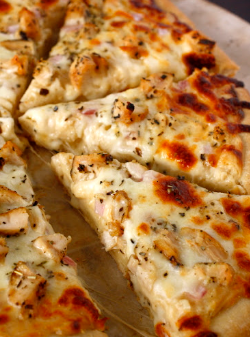
While classic tomato sauce often steals the spotlight, white garlic pizza sauce is the unsung hero of gourmet pizzas. Silky, aromatic, and packed with savory depth, this sauce is the foundation of beloved pizzas such as chicken alfredo, spinach and mushroom, shrimp scampi, and four-cheese white pies. Made with butter, garlic, cream, and cheese, it delivers richness without overwhelming the toppings.
This recipe focuses on balance: bold garlic flavor softened by cream, subtle herbs for complexity, and the right consistency to spread smoothly without soaking the crust. Once you master this sauce, it will become a staple in your kitchen—not only for pizza, but also for pasta, flatbreads, and baked vegetables.
🛒 Ingredients (makes enough for 2 large pizzas)
- 3 tablespoons unsalted butter
- 4 tablespoons olive oil
- 6 cloves garlic, finely minced
- 3 tablespoons all-purpose flour
- 1½ cups whole milk
- ½ cup heavy cream
- ¾ cup freshly grated Parmesan cheese
- ½ teaspoon salt (adjust to taste)
- ½ teaspoon white pepper or black pepper
- ½ teaspoon dried oregano
- ¼ teaspoon dried basil
- ⅛ teaspoon nutmeg (optional but recommended)
- 1 teaspoon lemon juice (optional, for balance)
🔪 Step 1: Building the Garlic Base
The soul of white pizza sauce lies in how the garlic is treated. Garlic must be fragrant and sweet—not bitter.
In a medium saucepan, melt the butter together with the olive oil over low to medium heat. Once the butter is fully melted and gently bubbling, add the minced garlic.
Cook the garlic slowly for 1–2 minutes, stirring constantly. It should become soft and aromatic without browning. Browning garlic at this stage will introduce bitterness that can overpower the sauce.
This gentle infusion allows the butter and oil to absorb the garlic’s flavor, forming the backbone of the sauce.
🥄 Step 2: Creating the Roux
Sprinkle the flour evenly over the garlic mixture. Using a whisk or wooden spoon, stir continuously for 1–2 minutes, cooking out the raw flour taste while maintaining a pale color.
This flour-fat mixture, known as a roux, is essential for thickening the sauce. The goal is a smooth, slightly foamy paste that coats the bottom of the pan without browning.
🥛 Step 3: Adding the Milk and Cream
Gradually pour in the milk while whisking constantly. This step prevents lumps and ensures a silky texture. Once the milk is fully incorporated, add the heavy cream.
Increase the heat slightly to medium and continue whisking as the sauce begins to thicken. This process takes 4–6 minutes. The sauce should coat the back of a spoon but still remain pourable.
The combination of milk and cream provides richness without heaviness, creating a sauce that complements pizza dough rather than weighing it down.
🧂 Step 4: Seasoning the Sauce
Once the sauce has thickened, lower the heat and add the salt, white pepper, oregano, basil, and nutmeg.
Nutmeg may seem unexpected, but even a tiny amount enhances the creaminess and adds depth without being noticeable.
Stir gently and allow the sauce to simmer for 2–3 minutes, letting the flavors meld together.
🧀 Step 5: Adding the Cheese
Remove the pan from the heat before adding the Parmesan cheese. Stir in the cheese gradually until fully melted and incorporated.
Adding cheese off the heat prevents it from becoming grainy and ensures a smooth, glossy finish.
If desired, add lemon juice at this stage. The acidity cuts through the richness and brightens the overall flavor, especially useful when pairing the sauce with rich toppings like bacon or sausage.
🍕 Perfect Consistency for Pizza
The ideal white garlic pizza sauce should be:
- Thick enough to spread without running
- Thin enough to melt evenly in the oven
- Smooth, creamy, and glossy
If the sauce is too thick, thin it with a tablespoon of milk at a time. If it’s too thin, return it briefly to low heat and simmer gently until reduced.
Allow the sauce to cool slightly before spreading on pizza dough. It will thicken further as it cools.
🍕 How to Use White Garlic Sauce on Pizza
Spread a thin, even layer of sauce over stretched pizza dough, leaving a small border for the crust. Use less sauce than tomato-based pizzas—this sauce is rich, and a little goes a long way.
Excellent topping combinations include:
- Grilled chicken, mozzarella, and spinach
- Mushrooms, caramelized onions, and fontina
- Shrimp, garlic, and fresh parsley
- Prosciutto, arugula, and shaved Parmesan
Bake at 250°C (475°F) on a preheated stone or steel for best results.
👨🍳 Professional Tips
- Always grate Parmesan fresh—pre-grated cheese won’t melt properly.
- Let the sauce cool before refrigerating; it thickens significantly when cold.
- This sauce can be made 3 days ahead and reheated gently.
- For roasted garlic flavor, replace half the garlic with roasted garlic paste.
🌱 Variations
- Vegan version: Use plant butter, olive oil, almond milk, and nutritional yeast.
- Spicy white sauce: Add red pepper flakes or cayenne.
- Herb-forward: Finish with fresh thyme or rosemary.
- Extra cheesy: Add a small amount of mozzarella for stretch.
✨ Conclusion
This White Garlic Pizza Sauce is creamy, aromatic, and deeply satisfying—a luxurious alternative to tomato sauce that elevates homemade pizza to restaurant quality. With its silky texture and balanced garlic flavor, it forms the perfect canvas for endless topping combinations.