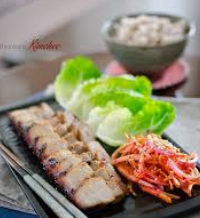
Best Korean Pork Belly (Samgyeopsal-Style, Elevated)
Korean pork belly is one of those magical dishes where simplicity meets obsession. At its core, it’s just thick slices of pork belly grilled until sizzling, then wrapped in lettuce with sauces, rice, and crunchy toppings. But when done right—with proper seasoning, perfect rendering, and bold Korean flavors—it becomes unforgettable. This recipe takes classic samgyeopsal and elevates it slightly, keeping it authentic while adding restaurant-level depth.
This version can be cooked on a stovetop, grill pan, cast iron, or outdoor grill. No fancy equipment needed—just patience, good pork, and respect for the fat.
🛒 Ingredients (Serves 4 generously)
Pork Belly
- 1.2–1.5 kg (2½–3 lb) skinless pork belly, cut into thick slices (1–1.5 cm thick)
- 1 tsp coarse sea salt
- ½ tsp freshly ground black pepper
Marinade (Optional but Highly Recommended)
Traditional samgyeopsal is often unseasoned, but this light marinade enhances flavor without overpowering the pork.
- 2 tbsp soy sauce
- 1 tbsp sesame oil
- 1 tbsp mirin or rice wine
- 1 tbsp brown sugar
- 3 cloves garlic, finely grated
- 1 tsp fresh ginger, grated
- ½ tsp gochugaru (Korean chili flakes)
Ssam Sauce (Spicy-Savory Paste)
- 2 tbsp ssamjang
- 1 tbsp gochujang
- 1 tsp sesame oil
- 1 tsp honey or sugar
- 1 tsp toasted sesame seeds
Fresh Sides (Essential)
- Green leaf lettuce, romaine, or perilla leaves
- Cooked short-grain white rice
- Garlic cloves, thinly sliced
- Green chilies or jalapeños, sliced
- Kimchi, well-fermented
- Pickled radish or cucumber (optional)
🔪 Step 1: Prepare the Pork Belly
Start with high-quality pork belly. Look for even layers of fat and meat—too fatty and it’ll feel greasy; too lean and it’ll dry out. Pat the pork belly dry thoroughly with paper towels. Moisture is the enemy of crispiness.
If using the marinade, whisk all marinade ingredients in a bowl. Gently coat the pork belly slices and let them marinate 30 minutes to 2 hours in the refrigerator. Do not marinate overnight—pork belly absorbs flavors quickly, and too much time will overpower the natural pork taste.
If you prefer the ultra-classic route, skip the marinade and season only with salt and pepper just before cooking.
🔥 Step 2: Heat the Pan (This Matters)
Use a heavy pan—cast iron is ideal. Heat it over medium-high heat until very hot. Do not add oil. Pork belly renders its own fat, and adding oil will make it greasy instead of crisp.
Place a single piece of pork belly in the pan to test the heat. If it sizzles loudly within two seconds, you’re ready.
🥓 Step 3: Cook the Pork Belly Perfectly
Lay the pork belly slices flat in the pan, leaving space between them. Overcrowding causes steaming, not searing.
Cook for 3–4 minutes per side, pressing gently with tongs to ensure even contact. You’re looking for:
- Golden-brown crust
- Rendered fat
- Slight char at the edges
Once both sides are browned, lower the heat slightly and continue cooking, turning every 30 seconds, until the pork is fully cooked but still juicy. Total cook time should be 8–10 minutes depending on thickness.
As fat accumulates in the pan, you can spoon some out—but leave a little for flavor.
🧄 Step 4: Garlic & Kimchi Magic
Push the pork to one side of the pan. Add sliced garlic and kimchi directly into the rendered pork fat. Sauté for 1–2 minutes until the garlic is lightly golden and the kimchi caramelizes.
This step is non-negotiable. Garlic fried in pork fat is one of life’s greatest pleasures.
✂️ Step 5: Slice & Rest
Transfer the pork belly to a cutting board and let it rest for 2 minutes. This keeps the juices inside. Slice into bite-size pieces using kitchen scissors or a sharp knife.
Sprinkle lightly with sesame seeds if desired.
🌶️ Step 6: Make the Ssam Sauce
Mix ssamjang, gochujang, sesame oil, honey, and sesame seeds until smooth. Taste and adjust:
- More honey for sweetness
- More gochujang for heat
- More sesame oil for nuttiness
This sauce should be bold, thick, and addictive.
🌿 Step 7: Assemble the Perfect Bite
Here’s how Koreans do it:
- Take a lettuce or perilla leaf
- Add a small spoon of rice
- Place 2–3 pieces of pork belly
- Add garlic, chili, kimchi
- Finish with ssam sauce
- Fold into a neat bundle and eat in one bite
Yes—one bite. That’s the rule 😄
🔥 Pro Tips for Next-Level Pork Belly
- Ventilation is key: Open windows or turn on fans—this gets smoky.
- Don’t rush: Pork belly rewards patience.
- Balance is everything: Fatty pork needs freshness (lettuce), spice (chili), acidity (kimchi).
- No fork required: Hands are traditional and encouraged.
🍶 What to Serve With It
- Ice-cold soju or makgeolli
- Light Korean soups like doenjang jjigae
- Simple cucumber salad
- Steamed egg (gyeran jjim)
❤️ Final Thoughts
The best Korean pork belly isn’t about complicated techniques—it’s about respecting the pork, rendering the fat properly, and balancing rich flavors with fresh, spicy, and crunchy elements. When you hear that first sizzle and smell garlic hitting pork fat, you’ll know you’re doing it right.
This dish isn’t just food—it’s an experience. A loud pan, a crowded table, and everyone reaching in for “just one more piece.”