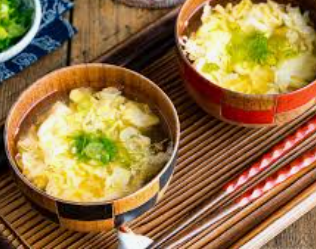
Tamago Kake Soup (Egg Drop Style) – Silky Comfort in a Bowl
Tamago kake gohan, the famous Japanese dish of raw egg stirred into hot rice, is beloved for its simplicity and silkiness. Tamago Kake Soup takes that same idea and translates it into liquid comfort: warm broth, softly set egg ribbons, and delicate seasoning that lets texture do the talking. It’s not flashy, it’s not loud—it’s soothing, nourishing, and deeply satisfying.
This soup is perfect for cold mornings, late nights, or days when your body asks for something gentle. Made with just a handful of ingredients, it relies entirely on technique, temperature, and restraint.
Ingredients (Serves 2–3)
For the Broth
- 4 cups (1 liter) dashi broth
(traditional kombu–katsuobushi dashi, or instant dashi if needed) - 1 teaspoon soy sauce (light)
- ½ teaspoon salt (adjust to taste)
- ½ teaspoon sesame oil (optional, for warmth)
For the Egg
- 3 large eggs, very fresh
- 1 tablespoon cold water or dashi
Optional Add-Ins
- 1 teaspoon mirin (for subtle sweetness)
- Sliced scallions
- Toasted sesame seeds
- Soft tofu cubes
- A pinch of white pepper
Step 1: Preparing the Broth – The Soul of the Soup
The broth sets the mood. Tamago Kake Soup is delicate by design, so the broth must be clean and clear.
If using homemade dashi, warm it gently in a medium saucepan over low heat. If using instant dashi, prepare it according to package instructions, slightly lighter than usual.
Season the broth with soy sauce, salt, and mirin if using. Stir gently and taste. The broth should be savory but mild—it must support the egg, not overpower it.
Keep the broth just below a simmer. You should see faint steam, not bubbles.
Step 2: Preparing the Eggs – Texture Is Everything
Crack the eggs into a bowl. Add 1 tablespoon of cold water or dashi.
Beat lightly with chopsticks or a fork—not until fully blended, but just enough to loosen the whites and yolks. This creates beautiful, soft strands instead of dense clumps.
Set the eggs aside. Timing matters here.
Step 3: Heat Control – The Critical Moment
Increase the heat under the broth slightly until it’s hot but not boiling. Boiling broth will toughen the eggs and destroy the silkiness that defines this soup.
If bubbles appear, lower the heat immediately.
Use a spoon or chopsticks to gently stir the broth in one direction, creating a slow whirlpool.
Step 4: Adding the Eggs – The Art of the Pour
Slowly drizzle the beaten eggs into the center of the swirling broth in a thin stream.
Do not stir immediately.
Wait 5–10 seconds, allowing the egg to set naturally into soft ribbons. Then gently stir once or twice to separate the strands.
Turn off the heat. Residual heat will finish cooking the egg.
Step 5: Final Seasoning and Balance
Taste the soup. Adjust salt if needed.
Add a few drops of sesame oil for warmth, or a pinch of white pepper for depth. Keep it subtle—this soup is about gentleness.
Let the soup rest for 30 seconds before serving. This pause lets the egg fully bloom.
Step 6: Serving – Minimal and Mindful
Ladle the soup into warm bowls.
Garnish with sliced scallions or sesame seeds if desired. Serve immediately.
Tamago Kake Soup is best eaten fresh—its beauty is in the moment.
Variations Inspired by Japanese Home Cooking
- Tamago Kake Soup with Rice
Add a small scoop of hot rice to the bowl before ladling the soup over it. - Tofu & Egg Drop Soup
Add soft tofu cubes just before the egg. - Ginger Tamago Soup
Add a few drops of ginger juice to the broth for warmth. - Miso Tamago Soup
Dissolve 1 teaspoon white miso into the broth before adding the egg.
Common Mistakes to Avoid
- Boiling the broth
- Over-whisking the eggs
- Stirring too aggressively
- Overseasoning
Each of these breaks the quiet balance of the dish.
Why This Soup Works
Tamago Kake Soup is proof that comfort doesn’t need complexity. It respects the ingredient, the eater, and the moment. It’s food that listens.
In Japan, dishes like this are made when someone is tired, unwell, or simply in need of care. It’s not dramatic—it’s intentional.
When to Serve It
- Breakfast on cold mornings
- Late-night nourishment
- Light starter before a meal
- Gentle food during recovery
It’s humble, honest, and endlessly soothing.