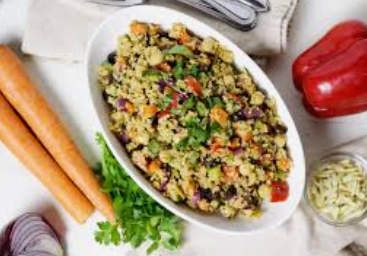
Moroccan Couscous with Roasted Vegetables
A fragrant, colorful dish that tastes like sunshine, spice markets, and slow Sundays
Moroccan couscous is more than just a meal—it’s a ritual, a celebration of balance, patience, and generosity. Traditionally served on Fridays and shared from a large communal platter, couscous represents hospitality and comfort. This roasted vegetable version keeps all the warmth and depth of Moroccan flavors while letting vegetables shine as the star. It’s naturally satisfying, deeply spiced, and incredibly versatile—perfect as a main dish or a stunning side.
Roasting the vegetables instead of simmering them intensifies their flavor, creating caramelized edges and sweet, smoky notes that contrast beautifully with fluffy couscous and aromatic spices. Finished with chickpeas, herbs, and optional harissa, this dish is humble yet impressive.
Ingredients (Serves 4–6)
For the roasted vegetables
- 2 medium carrots, peeled and cut into thick slices
- 1 large zucchini, sliced into half-moons
- 1 red bell pepper, cut into strips
- 1 yellow bell pepper, cut into strips
- 1 red onion, cut into wedges
- 1 small sweet potato, peeled and cubed
- 3 tablespoons olive oil
- 1 teaspoon ground cumin
- 1 teaspoon ground coriander
- 1 teaspoon paprika (smoked if possible)
- ½ teaspoon ground cinnamon
- ½ teaspoon turmeric
- Salt and freshly ground black pepper, to taste
For the couscous
- 2 cups medium couscous
- 2½ cups vegetable broth (hot)
- 2 tablespoons olive oil or butter
- ½ teaspoon salt
For the chickpeas
- 1½ cups cooked chickpeas (canned or freshly cooked, drained and rinsed)
- ½ teaspoon cumin
- ½ teaspoon paprika
- 1 tablespoon olive oil
For finishing and garnish
- ¼ cup raisins or sultanas (optional but traditional)
- ¼ cup toasted almonds or slivered almonds
- Fresh parsley or cilantro, finely chopped
- Lemon wedges
Optional extras
- Harissa paste or sauce
- Preserved lemon, finely chopped
- A drizzle of olive oil or argan oil
Step 1: Roast the Vegetables – Where the Magic Starts
Preheat your oven to 220°C (425°F). High heat is essential here—it helps the vegetables caramelize instead of steaming.
Place all the chopped vegetables on a large baking tray. Drizzle with olive oil, then sprinkle over cumin, coriander, paprika, cinnamon, turmeric, salt, and pepper. Use your hands to toss everything well, making sure each piece is lightly coated with oil and spices.
Spread the vegetables out into a single layer. Crowding the pan will trap moisture, so use two trays if needed.
Roast for 30–40 minutes, turning once halfway through. The vegetables should be tender inside, golden on the edges, and deeply aromatic. The sweet potato will become creamy, the peppers slightly charred, and the onions beautifully jammy.
When they come out of the oven, your kitchen should smell incredible—warm, sweet, and spicy.
Step 2: Prepare the Couscous – Light, Fluffy, and Fragrant
While the vegetables roast, place the couscous in a large heatproof bowl. Add salt and olive oil (or butter) and stir briefly to coat the grains.
Pour the hot vegetable broth over the couscous, cover the bowl tightly with a lid or plate, and let it sit for 5–7 minutes. No stirring yet—this resting time allows the grains to absorb liquid evenly.
After resting, uncover and fluff the couscous gently with a fork, lifting and separating the grains. The texture should be light and airy, not clumpy or mushy.
If using raisins, you can stir them into the couscous now—the residual heat will plump them slightly, adding little bursts of sweetness.
Step 3: Season the Chickpeas
In a small pan, heat olive oil over medium heat. Add the chickpeas, cumin, paprika, and a pinch of salt. Sauté for 5–7 minutes, stirring occasionally, until the chickpeas are warmed through and lightly golden.
This step adds depth and prevents the chickpeas from tasting flat. They should be savory, slightly crisp on the outside, and tender inside.
Step 4: Assemble the Couscous
Transfer the couscous to a large serving platter or wide bowl. Spoon the roasted vegetables over the top, allowing their oils and spices to seep into the grains below.
Scatter the spiced chickpeas evenly across the dish. Finish with toasted almonds for crunch and chopped parsley or cilantro for freshness.
For extra brightness, squeeze fresh lemon juice lightly over the top, or add a few finely chopped pieces of preserved lemon if you love that salty, citrusy punch.
Step 5: Serve and Customize
Serve the couscous warm, with harissa on the side so everyone can adjust the heat to their taste. A drizzle of good olive oil—or argan oil if you have it—adds a luxurious finish.
This dish is perfect on its own, but it also pairs beautifully with:
- Moroccan tomato salad
- Yogurt or labneh with olive oil
- Grilled halloumi or roasted chicken
- Spiced lamb or kefta for a heartier meal
Tips for the Best Moroccan Couscous
- Don’t over-spice: Moroccan food is aromatic, not overpowering. Balance is key.
- Use seasonal vegetables: Pumpkin, cauliflower, eggplant, or fennel all work wonderfully.
- Fluff patiently: Couscous rewards gentleness—use a fork, not a spoon.
- Make it ahead: This dish tastes even better the next day as the flavors meld.
Final Thoughts
Moroccan couscous with roasted vegetables is comfort food with elegance. It’s vibrant without being heavy, nourishing without feeling plain, and endlessly adaptable. Whether you serve it at a family table or as a centerpiece for guests, it carries warmth, generosity, and unmistakable Moroccan soul in every bite.