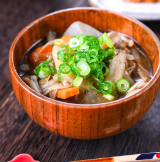
Kenchin Jiru (Traditional Japanese Vegetable Soup)
Kenchin Jiru is a comforting Japanese vegetable soup that originated in Buddhist temples during the Kamakura period. Traditionally served as part of shōjin ryōri (Zen Buddhist vegetarian cuisine), this humble yet deeply satisfying dish reflects the Japanese philosophy of minimizing waste and honoring seasonal ingredients. Made with root vegetables, tofu, and a light soy-based broth, Kenchin Jiru is wholesome, nourishing, and perfect for cooler weather.
Unlike many Japanese soups that rely heavily on fish-based dashi, traditional Kenchin Jiru is entirely plant-based. Its depth of flavor comes from sautéing vegetables in sesame oil before simmering them in kombu-based broth. The result is a light yet savory soup packed with texture and umami.
Ingredients (Serves 4–6)
For the Broth:
- 6 cups water
- 1 piece kombu (about 10 cm / 4 inches)
- 2 tablespoons soy sauce
- 1 tablespoon mirin
- 1 teaspoon salt (adjust to taste)
For the Soup:
- 1 block firm tofu (about 400 g / 14 oz), drained
- 1 tablespoon sesame oil
- 1 medium carrot, sliced into thin rounds
- 1 daikon radish (about 200 g), peeled and sliced into half-moons
- 1 medium burdock root (gobo), thinly sliced (optional but traditional)
- 2–3 shiitake mushrooms, sliced
- 1 small taro root or 1 medium potato, cubed
- 1 small leek or 2 green onions, sliced
- 1 sheet aburaage (fried tofu pouch), sliced (optional)
- Fresh parsley or mitsuba for garnish
Preparation Steps
Step 1: Prepare the Kombu Broth
Begin by gently wiping the kombu with a damp cloth to remove any dirt. Do not wash it under running water, as this removes valuable flavor compounds.
Place the kombu in a pot with 6 cups of cold water and let it soak for at least 20–30 minutes (or up to an hour if time allows). Slowly heat the pot over medium heat. Just before the water reaches a boil (you will see small bubbles forming along the edges), remove the kombu. Avoid boiling kombu, as it can make the broth slimy and bitter.
This simple kombu broth provides a clean, subtle umami base for the soup.
Step 2: Prepare the Tofu
Traditionally, Kenchin Jiru uses tofu that is lightly crumbled rather than cubed. After draining the tofu, wrap it in paper towels and gently press to remove excess moisture for about 10–15 minutes.
Once drained, crumble the tofu roughly by hand into bite-sized irregular pieces. This rustic texture is characteristic of authentic Kenchin Jiru.
Step 3: Prepare the Vegetables
Kenchin Jiru typically includes a variety of root vegetables, reflecting seasonality and resourcefulness.
- Slice carrots into thin rounds.
- Cut daikon into half-moons or quarter rounds.
- If using burdock root, peel lightly with the back of a knife, slice thinly on a diagonal, and soak briefly in water to prevent discoloration.
- Slice shiitake mushrooms.
- Cube taro or potato into bite-sized pieces.
- Slice leek or green onions.
Uniform cutting ensures even cooking and a pleasing presentation.
Step 4: Sauté the Vegetables
In a large soup pot, heat 1 tablespoon of sesame oil over medium heat. Add the crumbled tofu first and sauté for 2–3 minutes until lightly golden and slightly firm.
Next, add the burdock root (if using), carrots, daikon, mushrooms, and taro or potato. Stir and sauté for about 5–7 minutes. This step is crucial — lightly frying the vegetables enhances their natural sweetness and builds depth of flavor before simmering.
You may notice the vegetables beginning to glisten and slightly caramelize. This is exactly what you want.
Step 5: Simmer the Soup
Pour the prepared kombu broth into the pot with the sautéed vegetables and tofu. Bring the soup to a gentle simmer over medium heat.
Add soy sauce, mirin, and salt. Stir gently to combine.
Reduce the heat to low and simmer for 15–20 minutes, or until the root vegetables are tender but not mushy. Skim off any foam that rises to the surface for a clearer broth.
In the final few minutes of cooking, add sliced aburaage (if using) and the leek or green onions.
Taste and adjust seasoning as needed. The broth should be light but savory, with a balanced saltiness and subtle sweetness.
Step 6: Serve
Ladle the soup into bowls and garnish with freshly chopped mitsuba, parsley, or extra green onions.
Serve hot, ideally with steamed white rice and simple pickles for a traditional Japanese meal.
Tips for Authentic Flavor
- Do not over-season. Kenchin Jiru is meant to be delicate and balanced.
- Use seasonal vegetables. In autumn and winter, root vegetables like turnips and kabocha squash work beautifully.
- Keep it plant-based. Traditional temple-style Kenchin Jiru does not include meat or fish.
- Texture matters. The crumbled tofu gives the soup its signature rustic feel.
Variations
Although traditionally vegetarian, some modern versions add sliced chicken or use bonito-based dashi. However, if you wish to maintain authenticity, stick to kombu broth.
You can also add:
- Konnyaku slices for extra texture
- Spinach or napa cabbage for added greens
- A small splash of toasted sesame oil just before serving
Nutritional Benefits
Kenchin Jiru is naturally:
- High in fiber (from root vegetables)
- Rich in plant-based protein (from tofu)
- Low in fat
- Gluten-free (if using tamari instead of regular soy sauce)
- Vegan
The combination of root vegetables provides complex carbohydrates and minerals, while tofu contributes calcium and protein. The soup is light yet filling, making it ideal for digestion and overall wellness.
Cultural Background
The name “Kenchin” is said to originate from Kenchō-ji Temple in Kamakura, one of the oldest Zen temples in Japan. According to legend, a monk accidentally dropped tofu while preparing a meal and decided to crumble it into a vegetable soup rather than waste it. This simple act of mindfulness and practicality became a cherished recipe passed down through generations.
Kenchin Jiru embodies the spirit of mottainai — the Japanese concept of avoiding waste and appreciating resources.
Storage and Reheating
Kenchin Jiru stores well in the refrigerator for up to 3 days. In fact, the flavor often deepens overnight as the vegetables absorb more broth.
To reheat:
- Warm gently over low heat.
- Add a splash of water if the broth has reduced.
- Avoid boiling vigorously to preserve the delicate flavors.
This soup can also be frozen, though tofu texture may become slightly firmer after thawing.
Final Thoughts
Kenchin Jiru is more than just a vegetable soup — it is a reflection of Japanese culinary philosophy: simplicity, seasonality, balance, and respect for ingredients. Every bowl offers warmth, nourishment, and subtle complexity.
Whether you are exploring Japanese home cooking, seeking a wholesome plant-based meal, or simply craving a comforting soup on a cold evening, Kenchin Jiru is a timeless recipe worth mastering.