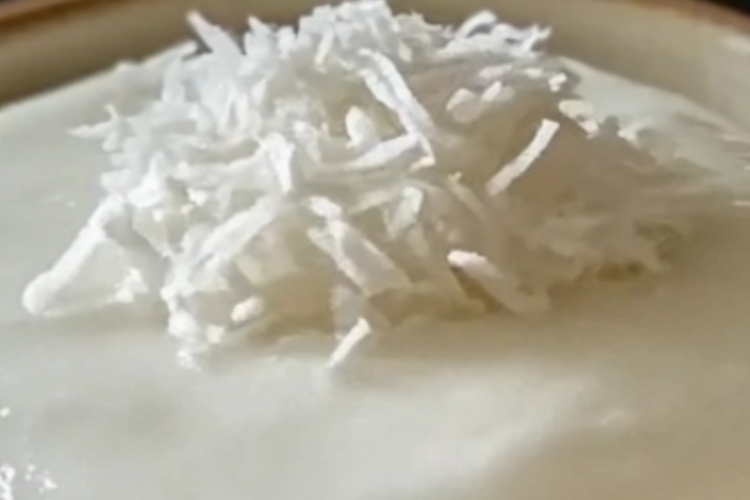
🥥🍮 Thai Coconut Custard (Sangkhaya)
A Silky, Fragrant Dessert with Tropical Elegance
✨ Introduction
Thai Coconut Custard, often known as Sangkhaya, is a beloved dessert in Thailand and across Southeast Asia. It’s a beautifully smooth, lightly sweet custard infused with creamy coconut milk and aromatic pandan. Traditionally steamed rather than baked, this dessert has a delicate, slightly firm texture—somewhere between a pudding and a flan.
Served on its own, paired with sticky rice, or even baked inside a hollowed pumpkin, Thai coconut custard is simple yet incredibly elegant. The combination of coconut richness and subtle sweetness makes it both comforting and refreshing.
🧾 Ingredients
For the Custard:
- 400 ml coconut milk (full-fat for best texture)
- 3 large eggs
- 100 g palm sugar (or brown sugar)
- 1 tablespoon white sugar (optional, for balance)
- 1/4 teaspoon salt
- 1 teaspoon vanilla extract (optional)
Traditional Flavoring:
- 2–3 pandan leaves, tied into a knot
(or 1 teaspoon pandan extract if unavailable)
Optional Serving:
- Sticky rice (glutinous rice)
- Fresh fruit (mango, banana)
🌿 What Makes This Custard Special?
Unlike Western custards, Thai coconut custard:
- Uses coconut milk instead of dairy
- Is often steamed rather than baked
- Has a firmer yet silky texture
- Features palm sugar, which adds a deep caramel-like flavor
Pandan leaves add a subtle floral aroma that elevates the entire dessert.
🥥 Step 1: Prepare the Coconut Mixture
In a mixing bowl:
- Pour in the coconut milk
- Add palm sugar and white sugar
- Stir gently until the sugar begins to dissolve
If your palm sugar is hard:
- Warm it slightly or grate it for easier mixing
💡 Tip: Do not heat the coconut milk too much—it can affect the final texture.
🍳 Step 2: Incorporate the Eggs
- Crack the eggs into a separate bowl
- Lightly beat them (do not overwhisk)
Slowly add the eggs to the coconut mixture while stirring gently.
⚠️ Important: Avoid creating too many bubbles—this keeps the custard smooth.
🌸 Step 3: Add Flavorings
- Add salt and vanilla extract (if using)
- Insert pandan leaves into the mixture
Stir gently to combine.
The mixture should now be:
- Smooth
- Slightly thick
- Fragrant
🥣 Step 4: Strain the Mixture
For a silky texture:
- Strain the custard mixture through a fine sieve into another bowl
This removes:
- Egg strands
- Air bubbles
- Undissolved sugar bits
💡 This step is key for a professional-quality custard.
🔥 Step 5: Prepare for Steaming
- Pour the strained mixture into heatproof ramekins or a shallow dish
- Cover loosely with foil to prevent water droplets from falling in
Prepare your steamer:
- Bring water to a gentle simmer
🍮 Step 6: Steam the Custard
- Place the custard in the steamer
- Steam over low to medium heat for 25–35 minutes
The custard is ready when:
- It is set but slightly jiggly in the center
- A toothpick inserted comes out mostly clean
⚠️ Avoid high heat—it can cause curdling.
❄️ Step 7: Cool and Set
- Remove from the steamer
- Let cool at room temperature
Then:
- Refrigerate for at least 2 hours
This helps the custard firm up and develop flavor.
🍽️ Step 8: Serve
You can enjoy Thai coconut custard in several ways:
Classic:
- Slice into squares and serve chilled
With Sticky Rice:
- Spoon over warm coconut sticky rice
With Fruit:
- Pair with mango or banana
Optional:
- Drizzle with coconut cream for extra richness
🌟 Texture & Flavor Experience
Thai Coconut Custard offers:
- Smooth, silky consistency
- Rich coconut flavor
- Caramel notes from palm sugar
- Subtle floral aroma from pandan
It’s light yet satisfying, making it perfect after a meal.
🔄 Variations
Pumpkin Custard (Sangkhaya Fak Thong)
- Pour custard into a hollowed pumpkin and steam
Baked Version
- Bake in a water bath at 160°C for 40–50 minutes
Extra Creamy
- Add a bit of coconut cream
Vegan Adaptation
- Replace eggs with cornstarch slurry (texture will differ)
🌿 Tips for Success
Use Full-Fat Coconut Milk
This ensures richness and proper setting.
Control Heat
Low, gentle steaming prevents curdling.
Don’t Overmix Eggs
Too much air leads to bubbles and uneven texture.
Strain the Mixture
This guarantees a smooth finish.
☕ Serving Suggestions
Pair with:
- Jasmine tea
- Coconut water
- Light herbal tea
Perfect for:
- Dinner parties
- Festive occasions
- Tropical-themed meals
📦 Storage
- Refrigerate for up to 3 days
- Keep covered to prevent drying
💡 Best served chilled or slightly cool.
💛 Final Thoughts
Thai Coconut Custard is a beautiful example of how simple ingredients can create something truly special. With its creamy texture, delicate sweetness, and aromatic notes, it’s a dessert that feels both comforting and refined.
Whether you serve it traditionally with sticky rice or enjoy it on its own, this custard is sure to transport you to a tropical paradise with every bite.