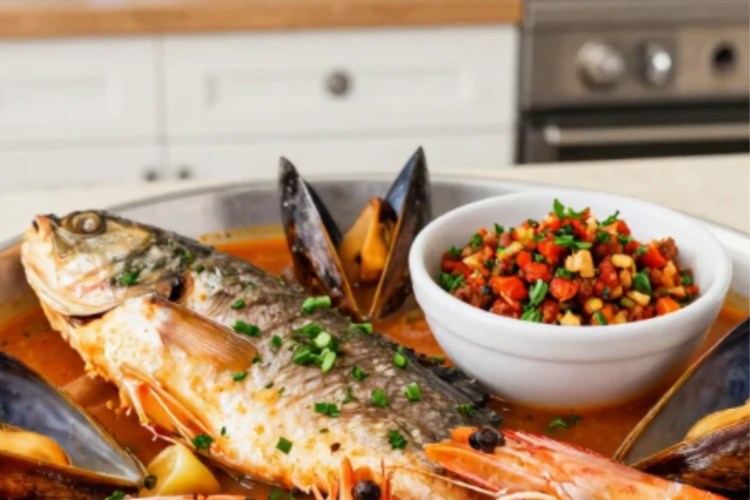
Traditional Bouillabaisse – A Soulful Taste of the Mediterranean (1000 Words)
Bouillabaisse is more than just a fish stew—it is a culinary emblem of the southern French coast, particularly the port city of Marseille. This richly flavored dish combines a variety of fresh fish, shellfish, aromatic herbs, and a saffron-infused broth that captures the essence of the sea. Originally created by fishermen using unsold catch, Bouillabaisse has evolved into a celebrated delicacy enjoyed around the world.
In this detailed guide, you’ll learn how to prepare an authentic Bouillabaisse at home, complete with traditional techniques, ingredient insights, and serving suggestions.
🛒 Ingredients (Serves 4–6)
🐟 For the Fish and Seafood:
- 1 kg mixed firm white fish (such as cod, sea bass, or snapper), cut into large chunks
- 500 g mussels, cleaned and debearded
- 300 g shrimp or prawns, peeled and deveined
- 300 g squid or calamari, cleaned and sliced into rings
- Optional: 200 g clams or scallops
🥕 For the Broth:
- 3 tbsp olive oil
- 1 large onion, finely chopped
- 1 leek (white part only), sliced
- 2 fennel bulbs, thinly sliced
- 4 cloves garlic, minced
- 4 ripe tomatoes, chopped (or 1 can crushed tomatoes)
- 1 tbsp tomato paste
- Zest of 1 orange
- 1 pinch saffron threads
- 1 tsp dried thyme
- 2 bay leaves
- 1 tsp fennel seeds (optional but traditional)
- 1.5 liters fish stock (or water + fish bouillon)
- Salt and freshly ground black pepper
🍞 For the Rouille (Garlic Saffron Sauce):
- 2 cloves garlic
- 1 egg yolk
- 1 tsp Dijon mustard
- 1 pinch saffron
- 100 ml olive oil
- 1 small boiled potato (optional, for thickness)
- Salt and lemon juice to taste
🥖 For Serving:
- Crusty baguette slices, toasted
- Fresh parsley, chopped
⏱️ Preparation Time
- Prep: 30 minutes
- Cooking: 1 hour
- Total: ~1 hour 30 minutes
🔪 Step 1: Prepare the Seafood
Start by cleaning all your seafood thoroughly. Rinse the fish pieces and pat them dry. Scrub the mussels and remove any beards. Discard any mussels that are open and do not close when tapped. Peel and devein the shrimp, and slice the squid into rings.
Keep the seafood refrigerated until ready to use.
🍲 Step 2: Build the Flavor Base
In a large heavy-bottomed pot or Dutch oven, heat the olive oil over medium heat. Add the chopped onion, leek, and fennel. Sauté for 8–10 minutes until softened and fragrant.
Add the minced garlic and cook for another minute. Stir in the chopped tomatoes and tomato paste, cooking for 5 minutes until the mixture thickens slightly.
🌿 Step 3: Add Aromatics and Broth
Now it’s time to infuse the dish with its signature flavors. Add the orange zest, saffron threads, thyme, bay leaves, and fennel seeds. Stir well to combine.
Pour in the fish stock and bring the mixture to a gentle boil. Reduce the heat and let it simmer uncovered for 20–25 minutes. This allows the flavors to meld into a rich, aromatic broth.
Taste and adjust seasoning with salt and pepper.
🐠 Step 4: Cook the Fish
Add the firm fish pieces to the simmering broth. Let them cook gently for about 5–7 minutes. Avoid stirring too much to prevent the fish from breaking apart.
Next, add the squid and cook for another 3–4 minutes.
🦐 Step 5: Add Shellfish
Add the mussels, shrimp, and any additional shellfish like clams or scallops. Cover the pot and cook for 5–6 minutes, or until the mussels and clams have opened and the shrimp are pink and opaque.
Discard any shellfish that do not open during cooking.
🍞 Step 6: Prepare the Rouille
While the stew is finishing, prepare the traditional rouille sauce. In a mortar and pestle or food processor, mash the garlic with a pinch of salt. Add the egg yolk, mustard, saffron, and boiled potato (if using).
Slowly drizzle in the olive oil while mixing continuously to create a thick, mayonnaise-like sauce. Finish with a squeeze of lemon juice and adjust salt to taste.
🔥 Step 7: Toast the Bread
Slice the baguette and toast the pieces until golden and crisp. These will be used to serve alongside the Bouillabaisse and to spread with rouille.
🍽️ Step 8: Serve the Bouillabaisse
Traditionally, Bouillabaisse is served in two parts: first the broth, then the fish.
Ladle the hot broth into bowls and serve with toasted baguette slices spread with rouille. Then, serve the fish and seafood on a separate platter or in the same bowl, garnished with fresh parsley.
Encourage diners to dip the rouille-covered bread into the broth for a full flavor experience.
💡 Tips for Success
- Use fresh seafood: The quality of your fish and shellfish will განს directly impact the final dish.
- Don’t overcook: Seafood cooks quickly—add it in stages to avoid toughness.
- Balance flavors: The saffron, fennel, and orange zest should complement, not overpower.
- Make your own stock: If possible, use fish bones and scraps to create a homemade stock for deeper flavor.
🌍 A Bit of History
Bouillabaisse originated in Marseille as a humble fisherman’s stew. The name comes from the Provençal words “bouillir” (to boil) and “abaisser” (to reduce heat), describing the cooking method. Over time, it გახდა a refined dish served in upscale restaurants, often featuring expensive seafood like lobster.
Despite its evolution, the heart of Bouillabaisse remains rooted in simplicity, tradition, and respect for fresh ingredients.
🧡 Final Thoughts
Preparing Bouillabaisse at home is a rewarding culinary journey. It may seem complex, but each step builds layers of flavor that culminate in a dish that is both comforting and elegant. Whether you’re hosting a dinner party or exploring Mediterranean cuisine, this recipe offers a taste of coastal France that’s hard to forget.
Take your time, enjoy the aromas, and don’t forget the rouille—it’s the soul of the dish.