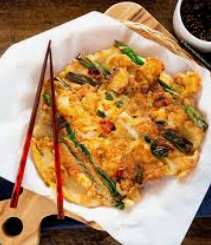
Korean Pancakes (Pajeon) – Crispy Scallion Perfection
Introduction
Pajeon is one of Korea’s most beloved pancakes, traditionally made with long green onions (“pa”) folded into a light batter and pan-fried until crisp. It’s commonly eaten on rainy days with makgeolli (Korean rice wine), served as a shared dish at the table, or enjoyed as a quick, satisfying meal at home.
What makes pajeon special is its balance: crunchy on the outside, tender inside, savory but not heavy, and endlessly adaptable. While the classic version focuses on scallions, many variations exist—seafood pajeon (haemul pajeon), kimchi pajeon, or even vegetable-packed versions for a lighter feel.
This recipe sticks close to the traditional approach but keeps things simple and accessible, using ingredients you can easily find. The key is technique: a cold batter, a hot pan, and enough oil to create that iconic crisp crust.
Ingredients (Makes 2 large pancakes)
For the Pancake Batter
- 1 cup all-purpose flour
- ¼ cup rice flour or cornstarch (for extra crispiness)
- 1 large egg
- 1 cup very cold water (or ice water)
- ½ teaspoon salt
For the Filling
- 5–6 scallions (green onions), cut to pan length
- Optional add-ins:
- 100 g shrimp, cleaned and halved
- 100 g squid, thinly sliced
- Sliced mushrooms
- Thin onion slices
- Red chili slices (for heat)
For Cooking
- Neutral oil (vegetable, sunflower, or canola)
Dipping Sauce (Essential!)
- 2 tablespoons soy sauce
- 1 tablespoon rice vinegar
- 1 teaspoon sugar or honey
- 1 teaspoon sesame oil
- 1 teaspoon gochugaru (optional)
- 1 teaspoon toasted sesame seeds
- Finely sliced green onion
Mix everything together and set aside. This sauce is not optional—it completes the dish.
Step 1: Prepare the Scallions
Wash the scallions thoroughly and pat them completely dry. Moisture is the enemy of crisp pancakes.
Trim them so they fit neatly into your pan. Traditionally, the scallions are laid whole to create a striking visual pattern, but cutting them in half lengthwise also works and helps them cook evenly.
Set aside.
Step 2: Make the Batter
In a medium bowl, combine the flour, rice flour (or cornstarch), and salt. In a separate bowl, lightly beat the egg with the cold water.
Pour the liquid into the dry ingredients and gently mix. Do not overmix. The batter should be thin, slightly lumpy, and pourable—similar to crepe batter. Overmixing develops gluten and makes the pancake tough instead of light.
Let the batter rest in the fridge for 10 minutes. Cold batter + hot oil = crisp magic.
Step 3: Heat the Pan Properly
Use a heavy nonstick or cast-iron skillet. Heat it over medium-high heat and add enough oil to coat the bottom generously. Pajeon is pan-fried, not shallow-steamed—don’t be shy with oil.
Once the oil shimmers, you’re ready to cook.
Step 4: Arrange the Scallions
Lay the scallions directly into the hot pan, side by side, creating a flat layer. If using seafood or vegetables, distribute them evenly on top of the scallions.
This step ensures the scallions cook directly against the hot surface, giving them flavor and slight char.
Step 5: Add the Batter
Give the batter a quick stir, then ladle it evenly over the scallions. Use just enough to bind everything together—pajeon should be vegetable-forward, not batter-heavy.
Tilt the pan gently so the batter spreads evenly and reaches the edges.
Lower the heat to medium and let the pancake cook undisturbed for 4–5 minutes. You should hear steady sizzling.
Step 6: Flip with Confidence
When the bottom is golden brown and crispy, it’s time to flip. Slide a wide spatula underneath and flip in one confident motion.
If it scares you, you’re doing it right.
Add a little more oil around the edges and cook the second side for another 3–4 minutes until deeply golden.
Step 7: Crisp the Edges (Restaurant Trick)
For extra crispiness, gently press the pancake down with your spatula and drizzle a tiny bit of oil around the edges. This final fry creates that shatteringly crisp border that makes pajeon addictive.
Step 8: Slice and Serve
Transfer the pancake to a cutting board. Let it rest for 1 minute, then slice into squares or wedges.
Serve immediately with the dipping sauce.
Tips for Perfect Pajeon Every Time
- Cold batter is crucial: It creates steam when it hits the hot oil
- Use enough oil: This is not the time to diet
- Don’t overload the batter: Vegetables should shine
- Medium heat wins: Too hot burns, too low sogs
Popular Variations
Haemul Pajeon (Seafood Pancake)
Add shrimp, squid, or clams for a richer, umami-packed version.
Kimchi Pajeon
Replace scallions with chopped kimchi and reduce salt slightly.
Vegetable Pajeon
Add zucchini, carrots, mushrooms, or bell peppers for a colorful twist.
Final Thoughts
Pajeon is humble, comforting, and deeply satisfying. It’s proof that simple ingredients, treated with care, can create something extraordinary. Once you master the basic technique, you’ll find yourself making this on lazy evenings, rainy days, or anytime you crave something crispy and savory.