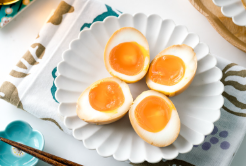
Ramen Eggs (Ajitsuke Tamago) – The Ultimate Guide
Ajitsuke Tamago (味付け玉子), often simply called ramen eggs, are soft-boiled eggs marinated in a soy-based sauce until the whites become deeply flavorful while the yolks stay jammy, custardy, and rich. In Japan, they’re a staple ramen topping, but once you master them, you’ll find yourself adding them to rice bowls, salads, toast, or eating them straight from the fridge at midnight.
This recipe aims for perfectly set whites and molten yolks, balanced seasoning, and a marinade that enhances rather than overpowers the egg.
Ingredients (Serves 4–6)
For the Eggs
- 6 large eggs (very fresh eggs peel poorly—slightly older is better)
- Water (enough to cover eggs)
- Ice cubes (for shocking)
For the Marinade
- 120 ml (½ cup) soy sauce (Japanese shoyu preferred)
- 120 ml (½ cup) water
- 60 ml (¼ cup) mirin
- 1 tablespoon sugar (optional but traditional)
- 1 small piece kombu (optional but recommended)
- 1 clove garlic, lightly crushed (optional)
- 1 slice fresh ginger (optional)
Step 1: Understanding the Perfect Egg
The soul of ajitsuke tamago is the yolk. You’re not aiming for runny like a poached egg, nor fully set like a hard-boiled egg. The ideal yolk is jammy, slightly thickened but still creamy, with a rich orange center.
Timing is everything. Even 30 seconds too long can push the yolk past perfection.
Step 2: Boiling the Eggs Precisely
- Bring a medium pot of water to a rolling boil.
- Gently lower the eggs into the water using a spoon. This prevents cracking.
- Once the eggs are in, start your timer immediately.
Cooking Time Options:
- 6 minutes → very soft, custardy center
- 6½ minutes → classic ramen egg (recommended)
- 7 minutes → slightly firmer, still creamy
- Maintain a gentle boil—don’t let the water rage wildly.
- When the timer ends, immediately transfer the eggs into an ice bath.
Step 3: Ice Bath & Peeling Like a Pro
The ice bath stops cooking instantly and helps separate the shell from the white.
- Let eggs chill for at least 5 minutes
- Gently tap the egg all over
- Start peeling from the wider end (there’s usually an air pocket there)
- Peel under running water if needed
Take your time. A smooth egg absorbs marinade evenly and looks stunning when sliced.
Step 4: Making the Marinade
In a small saucepan, combine:
- Soy sauce
- Water
- Mirin
- Sugar (if using)
- Kombu, garlic, and ginger (optional)
- Heat gently until the sugar dissolves.
- Do not boil—you want harmony, not harshness.
- Remove from heat and let cool completely.
This marinade is a balancing act: salty, sweet, umami-rich, and subtle. Too strong and it overwhelms the egg; too weak and it disappears.
Step 5: Marinating the Eggs
Place peeled eggs in a container just large enough to hold them snugly.
- Pour cooled marinade over the eggs
- Eggs should be mostly submerged (rotate if needed)
- Cover and refrigerate
Marinating Time:
- 4 hours → lightly seasoned
- 8 hours → classic flavor
- 12–24 hours → deep umami, darker exterior
For even flavor, turn the eggs halfway through if they’re not fully submerged.
Step 6: Slicing and Serving
When ready to serve:
- Slice eggs in half lengthwise using a sharp knife
- Wipe the blade between cuts for clean edges
The whites should be amber-tinted, and the yolk should gleam like molten gold.
How to Use Ajitsuke Tamago
These eggs aren’t just for ramen (though they shine there).
Try them:
- On tonkotsu, shoyu, or miso ramen
- Over steamed rice with sesame oil and scallions
- In bento boxes
- On avocado toast
- Chopped into noodle salads
- With chili oil and furikake as a snack
Storage Tips
- Store marinated eggs in the fridge for up to 4 days
- Keep them submerged or covered to prevent drying
- The flavor intensifies over time
Common Mistakes (and How to Avoid Them)
- Overcooking: Even 30 seconds matters. Set a timer.
- Hot marinade: Always cool it fully or you’ll overcook the yolk.
- Too salty: Dilute soy sauce with water—this is essential.
- Rushing the peel: Patience = smooth eggs.
Optional Variations
- Spicy: Add chili oil or dried chili flakes to the marinade
- Smoky: Add a drop of toasted sesame oil (very subtle)
- Richer: Replace some water with dashi
- No mirin: Use honey or sugar + a splash of rice vinegar
Final Thoughts
Ajitsuke tamago are a lesson in restraint and precision. Simple ingredients, careful timing, and respect for balance. Once you make them a few times, your hands will remember the timing, your eyes will recognize the perfect yolk, and your fridge will never be without them again.