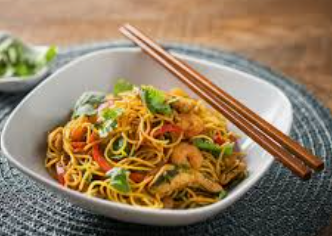
Singapore Noodles (Curry Vermicelli Stir-Fry)
Despite the name, Singapore Noodles aren’t actually from Singapore—they’re a Cantonese creation that became a global favorite thanks to Chinese restaurants abroad. The magic comes from thin rice vermicelli tossed with curry powder, soy sauce, shrimp, BBQ pork, eggs, and crunchy vegetables. The result? Smoky, savory, slightly spicy noodles with insane aroma and texture.
This recipe walks you through everything—ingredient choices, prep strategy, wok technique, and chef-level tips—so your noodles slap just as hard at home as they do at your favorite restaurant.
Ingredients (Serves 4 generously)
Noodles & Protein
- 400 g (14 oz) rice vermicelli (thin, not glass noodles)
- 200 g raw shrimp, peeled and deveined
- 150 g Chinese BBQ pork (char siu), sliced thin
(Sub: chicken, beef, tofu, or leave it shrimp-only) - 2 large eggs, lightly beaten
Vegetables
- 1 medium onion, thinly sliced
- 1 red bell pepper, julienned
- 1 cup bean sprouts
- 3–4 green onions, cut into 5 cm (2-inch) lengths
- 2 cloves garlic, finely minced
Sauce & Seasoning
- 2 tsp Madras curry powder (adjust to taste)
- 1 tsp turmeric powder (optional but classic)
- 2 tbsp light soy sauce
- 1 tbsp oyster sauce
- 1 tsp dark soy sauce (for color)
- ½ tsp white pepper
- ½ tsp sugar
- Salt, to taste
Cooking
- 3–4 tbsp neutral oil (peanut, sunflower, or canola)
- 2–3 tbsp water or chicken stock
Optional Garnishes
- Chili oil or sambal
- Extra white pepper
- Fresh cilantro
- Lime wedges (non-traditional but 🔥)
Step 1: Prepare the Vermicelli (Critical Step)
Rice vermicelli is delicate. Treat it right and it’ll be silky and springy; mess it up and it turns mushy.
- Place noodles in a large bowl.
- Cover with hot (not boiling) water.
- Soak for 5–7 minutes, just until flexible.
- Drain well and toss with 1 tsp oil to prevent sticking.
👉 The noodles should still feel slightly firm—they’ll finish cooking in the wok.
Step 2: Prep Everything Before You Cook
Singapore Noodles cook fast. Once the wok is hot, there’s no time to chop.
- Pat shrimp dry and season lightly with salt and white pepper.
- Slice char siu thin so it heats quickly.
- Mix all sauces and spices in a small bowl.
- Beat eggs and set aside.
- Keep vegetables grouped and ready.
This mise en place is what separates “home cooking” from “restaurant vibes.”
Step 3: Fire Up the Wok
Heat a large wok or wide skillet over high heat until lightly smoking. Add 1 tbsp oil.
Cook the Shrimp
- Add shrimp in a single layer.
- Cook 30–45 seconds per side, just until pink.
- Remove and set aside.
Don’t overcook—shrimp will return later.
Step 4: Eggs First, Always
Add another tbsp oil.
- Pour in beaten eggs.
- Let them set briefly, then scramble gently.
- Once just cooked, push eggs to the side or remove and reserve.
Soft eggs = better texture in the final dish.
Step 5: Aromatics & Curry Bloom
Add remaining oil to the wok.
- Toss in onions and stir-fry for 1–2 minutes.
- Add garlic and stir until fragrant.
- Sprinkle in curry powder and turmeric.
🔥 This step is everything. Blooming the spices in oil releases their aroma and gives the noodles that unmistakable golden color.
Step 6: Bring in the Noodles
Add drained vermicelli directly to the wok.
- Toss quickly to coat noodles in curry oil.
- Splash in 2–3 tbsp water or stock to loosen.
- Stir-fry constantly, lifting and flipping.
The noodles should absorb flavor without breaking.
Step 7: Sauce It Up
Pour in the prepared sauce mixture.
- Toss thoroughly so every strand is coated.
- Add dark soy sparingly—it’s for color, not saltiness.
- Sprinkle in sugar and white pepper.
Taste now. Adjust salt or soy if needed.
Step 8: Add Veggies & Proteins Back
- Add bell peppers, bean sprouts, char siu, shrimp, and eggs.
- Toss over high heat for 1–2 minutes.
- Finish with green onions.
You want vegetables crisp, shrimp juicy, and noodles smoky.
Step 9: Final Adjustments & Serve
Turn off heat.
- Add chili oil if you like heat.
- Finish with extra white pepper.
- Serve immediately—Singapore Noodles hate waiting.
Chef Tips for Next-Level Singapore Noodles
🔥 High heat = wok hei
If your pan isn’t hot enough, you’ll steam the noodles instead of frying them.
🍜 Don’t overcrowd
If your pan is small, cook in batches. Crowding kills texture.
🌶 Curry powder matters
Madras curry powder is traditional—aromatic, not sweet.
🧄 Garlic burns fast
Add it after onions, not before.
🥬 Balance is key
Singapore Noodles should be savory, aromatic, lightly spicy, and not greasy.
Variations You’ll Love
- Vegetarian: Skip meat, add shiitake mushrooms and tofu.
- Seafood-loaded: Add squid or scallops.
- Extra spicy: Add fresh chili or sambal.
- Low-oil version: Use a nonstick pan and reduce oil slightly (less authentic, still tasty).
Final Thoughts
Singapore Noodles are the perfect example of controlled chaos—fast cooking, bold spices, and a harmony of textures. Once you master this dish, it becomes a weeknight weapon and a dinner-party flex.