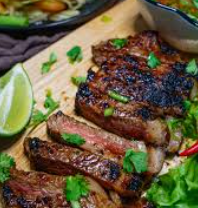
Thai Crying Tiger Beef (Nam Tok Nuea) – A Bold and Flavorful Thai Classic
Thai Crying Tiger Beef, known in Thailand as Suea Rong Hai, is one of the most beloved grilled beef dishes in Thai cuisine. The name translates to “Crying Tiger,” and while the origins of the name are debated, many say it refers to either the juiciness of the beef that would make a tiger cry or the fiery dipping sauce that brings tears to your eyes. Traditionally served in northeastern Thailand (Isaan region), this dish combines smoky grilled steak with a vibrant, spicy, tangy dipping sauce that perfectly balances sweet, sour, salty, and heat.
This recipe will guide you step-by-step to create authentic Thai Crying Tiger Beef at home using simple ingredients while preserving traditional flavors.
🌿 Ingredients
For the Beef:
- 800 g (about 1.75 lbs) flank steak, sirloin, or ribeye (preferably well-marbled)
- 2 tablespoons oyster sauce
- 1 tablespoon light soy sauce
- 1 teaspoon fish sauce
- 1 teaspoon palm sugar (or brown sugar)
- 1 teaspoon freshly ground black pepper
- 2 cloves garlic, minced
For the Nam Jim Jaew (Spicy Thai Dipping Sauce):
- 2 tablespoons fish sauce
- 1 tablespoon tamarind paste
- 1 tablespoon lime juice (freshly squeezed)
- 1 teaspoon palm sugar
- 1–2 teaspoons Thai chili flakes (to taste)
- 1 tablespoon toasted rice powder (khao khua)
- 1 tablespoon finely chopped shallots
- 1 tablespoon chopped fresh cilantro
- 1 tablespoon chopped green onions
Optional Garnishes:
- Fresh cucumber slices
- Fresh herbs (mint, cilantro)
- Sticky rice (for serving)
🔥 Step 1: Preparing the Beef
The quality of beef is essential in this dish. Traditionally, Crying Tiger Beef uses cuts like flank or sirloin because they grill beautifully and develop a smoky char while staying tender when sliced properly. Ribeye also works wonderfully if you prefer extra juiciness.
In a mixing bowl, combine oyster sauce, soy sauce, fish sauce, palm sugar, black pepper, and minced garlic. Stir well until the sugar dissolves. Place the beef in a shallow dish and coat it evenly with the marinade. Massage the marinade into the meat to ensure deep flavor penetration.
Cover and refrigerate for at least 1 hour. For best results, marinate for 3–4 hours. Avoid marinating overnight if using very tender cuts, as the salt can slightly alter the texture.
Remove the beef from the refrigerator about 30 minutes before grilling to allow it to come to room temperature. This ensures even cooking.
🔥 Step 2: Toasting the Rice Powder (Khao Khua)
Toasted rice powder is a signature ingredient in northeastern Thai cooking. It adds a nutty aroma and slight crunch to the dipping sauce.
Place 2 tablespoons of uncooked sticky rice (or jasmine rice) in a dry skillet over medium heat. Stir continuously for about 8–10 minutes until the rice turns golden brown and fragrant. Remove from heat and let cool. Once cooled, grind the rice using a mortar and pestle or spice grinder until it becomes a coarse powder.
Set aside.
🔥 Step 3: Grilling the Beef
Traditional Crying Tiger Beef is grilled over charcoal, which adds an irresistible smoky aroma. If you don’t have a charcoal grill, a grill pan or cast-iron skillet works well.
Preheat your grill to high heat. Lightly oil the grates to prevent sticking.
Place the marinated beef directly over high heat. Grill for about 3–5 minutes per side for medium-rare, depending on thickness. Thai Crying Tiger Beef is typically served medium-rare to medium, allowing the inside to stay juicy and tender.
Avoid moving the meat too much while grilling; this helps develop a beautiful char crust.
Once cooked to your desired doneness, remove the steak and let it rest for at least 10 minutes. Resting is crucial—it allows juices to redistribute throughout the meat.
🌶️ Step 4: Making Nam Jim Jaew (Spicy Dipping Sauce)
While the beef rests, prepare the dipping sauce.
In a bowl, combine fish sauce, tamarind paste, lime juice, and palm sugar. Stir until the sugar dissolves completely. Add chili flakes and toasted rice powder. Mix well.
Finally, fold in chopped shallots, cilantro, and green onions.
Taste and adjust:
- Add more lime for acidity.
- Add more sugar if too sour.
- Add more chili flakes for heat.
- Add fish sauce for saltiness.
The sauce should taste bold—salty, sour, slightly sweet, and spicy all at once.
🔪 Step 5: Slicing the Beef
After resting, slice the steak thinly against the grain. Cutting against the grain shortens the muscle fibers, making each bite more tender.
Arrange the slices on a serving platter. Sprinkle a little extra toasted rice powder or fresh herbs over the top for extra aroma.
🍚 Serving Suggestions
Thai Crying Tiger Beef is traditionally served with:
- Sticky rice (khao niao)
- Fresh vegetables like cucumber, cabbage, or long beans
- Fresh herbs such as mint and cilantro
To eat authentically, take a small ball of sticky rice, dip a slice of beef into the Nam Jim Jaew sauce, and enjoy together. The sticky rice balances the spicy sauce perfectly.
🌶️ Flavor Profile
What makes Thai Crying Tiger Beef special is its perfect balance:
- Smoky from the grill
- Savory from soy and fish sauce
- Tangy from lime and tamarind
- Spicy from chili flakes
- Nutty from toasted rice powder
- Fresh from herbs and shallots
Each bite delivers a complex explosion of flavors typical of Thai cuisine.
💡 Tips for Perfect Crying Tiger Beef
- Use high heat – A strong sear creates the signature char.
- Don’t overcook – Medium-rare keeps the beef juicy.
- Rest properly – Never skip resting the meat.
- Balance the sauce carefully – Thai cuisine is about harmony.
- Charcoal if possible – It elevates the dish dramatically.
🥢 Variations
- Spicier version: Add fresh bird’s eye chilies instead of chili flakes.
- Sweeter version: Add an extra teaspoon of palm sugar.
- Healthier option: Use lean sirloin and reduce sugar slightly.
- Fusion twist: Serve in lettuce wraps for a low-carb alternative.
🐅 Why Is It Called Crying Tiger?
There are several charming legends behind the name:
- The beef is so delicious it would make a tiger cry.
- The dipping sauce is so spicy it brings tears.
- In older times, tougher cuts of beef made even a tiger cry while chewing.
Regardless of its origin, one thing is certain—this dish is unforgettable.
🕒 Storage and Reheating
Store leftover beef in an airtight container in the refrigerator for up to 3 days. Keep the sauce separate for freshness.
Reheat the beef quickly in a hot pan for 1–2 minutes to avoid overcooking. The sauce is best enjoyed fresh but can last 1–2 days refrigerated.
🌏 Final Thoughts
Thai Crying Tiger Beef is a celebration of bold flavors and simple cooking techniques. With just a handful of ingredients and a hot grill, you can recreate a street-food favorite right in your kitchen. The smoky steak paired with that addictive Nam Jim Jaew sauce makes this dish perfect for gatherings, barbecues, or even a special weeknight dinner.
Once you try it, you’ll understand why it’s one of Thailand’s most famous grilled beef dishes.