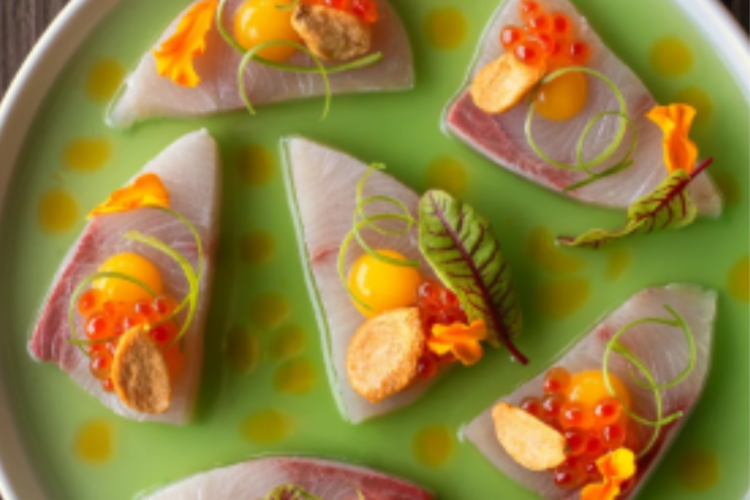
Fresh Hamachi Crudo with Zesty Yuzu Ponzu Sauce
Introduction
Few dishes capture elegance and simplicity like Hamachi Crudo. Inspired by Japanese sashimi traditions and Italian crudo techniques, this dish highlights the pristine quality of fresh fish with bright, citrusy accents. Hamachi, also known as yellowtail, is prized for its buttery texture and delicate flavor, making it perfect for raw preparations.
This recipe pairs thinly sliced hamachi with a vibrant yuzu ponzu sauce—an irresistible blend of citrus, soy, and umami. The result is a dish that feels both luxurious and refreshing, perfect as a starter for a dinner party or a light, sophisticated meal.
Ingredients
For the Hamachi Crudo
- 300g sushi-grade hamachi (yellowtail), skin removed
- 1 tablespoon extra virgin olive oil (high quality)
- Flaky sea salt (to taste)
- Freshly ground white or black pepper
- 1 small cucumber, thinly sliced into ribbons
- 1 small radish, very thinly sliced
- Microgreens or baby herbs (such as cilantro or shiso leaves)
- Optional: thin slices of avocado
For the Yuzu Ponzu Sauce
- 3 tablespoons soy sauce
- 2 tablespoons fresh yuzu juice (or substitute with lemon + lime mix)
- 1 tablespoon rice vinegar
- 1 teaspoon mirin
- ½ teaspoon sugar (optional, to balance acidity)
- ½ teaspoon grated fresh ginger
- ½ teaspoon sesame oil
Optional Garnishes
- Toasted sesame seeds
- Thinly sliced chili (red or green)
- Finely chopped chives
- Crispy shallots
Equipment
- Very sharp knife (preferably a sashimi knife)
- Cutting board
- Small mixing bowl
- Tweezers (optional, for precise plating)
- Serving plate (preferably chilled)
Step 1: Selecting the Hamachi
The success of this dish depends entirely on the quality of the fish. Always choose sushi-grade hamachi from a trusted fishmonger. The flesh should be pale pink with a slight translucency and no strong odor.
Keep the fish refrigerated until just before slicing. Cold fish is easier to cut into clean, precise slices.
Step 2: Preparing the Yuzu Ponzu Sauce
In a small bowl, combine:
- Soy sauce
- Yuzu juice
- Rice vinegar
- Mirin
- Sugar (if using)
Whisk gently until the sugar dissolves. Add grated ginger and sesame oil, then mix again.
Taste the sauce. It should be balanced—salty, citrusy, slightly sweet, and deeply umami. Adjust according to preference by adding more citrus for brightness or soy for depth.
Set aside in the refrigerator to chill while you prepare the fish.
Step 3: Preparing the Garnishes
Thin garnishes elevate both texture and presentation:
- Use a mandoline or sharp knife to slice the radish paper-thin.
- Slice cucumber into long ribbons using a vegetable peeler.
- If using chili, slice it into very fine rings.
- Lightly toast sesame seeds in a dry pan for 1–2 minutes until fragrant.
Keep everything fresh and crisp.
Step 4: Slicing the Hamachi
Remove the hamachi from the refrigerator and pat it dry gently with paper towels.
Using a very sharp knife:
- Slice against the grain into thin pieces (about 3–5 mm thick).
- Use a single, smooth motion to avoid tearing the flesh.
- Wipe the blade between cuts for clean slices.
Arrange the slices on a chilled plate, slightly overlapping them in a circular or linear pattern.
Step 5: Plating the Dish
Plating is where artistry comes in. Aim for a clean, elegant presentation:
- Lay the hamachi slices evenly across the plate.
- Tuck cucumber ribbons and radish slices between the fish.
- Add a few slices of avocado if desired.
- Scatter microgreens or herbs lightly on top.
Avoid overcrowding—the beauty of crudo lies in its simplicity.
Step 6: Dressing the Crudo
Just before serving:
- Drizzle the yuzu ponzu sauce lightly over the fish.
- Add a few drops of high-quality olive oil for richness.
- Sprinkle flaky sea salt and a touch of pepper.
Finish with:
- Toasted sesame seeds
- Chili slices (if using)
- Chopped chives or crispy shallots
Step 7: Serving
Serve immediately while the fish is cold and fresh.
This dish pairs beautifully with:
- Chilled sake
- Dry white wine (such as Sauvignon Blanc)
- Sparkling water with citrus
Encourage guests to enjoy it right away, as crudo is best eaten fresh.
Tips for Success
1. Use the freshest fish possible
Never compromise on quality. Sushi-grade fish ensures safety and optimal flavor.
2. Keep everything cold
Cold temperatures maintain the fish’s texture and freshness.
3. Balance flavors carefully
The ponzu should enhance—not overpower—the hamachi.
4. Slice with precision
Clean, even slices improve both texture and presentation.
5. Dress at the last moment
Acid from the ponzu can “cook” the fish slightly if left too long.
Variations
1. Spicy Hamachi Crudo
Add a few drops of chili oil or a touch of wasabi to the ponzu.
2. Truffle Hamachi Crudo
Finish with a drizzle of truffle oil and shaved truffle for a luxurious twist.
3. Mediterranean Style
Replace ponzu with lemon juice, capers, and olive oil.
4. Mango Yuzu Crudo
Add diced mango for a sweet contrast to the citrus and umami.
Nutritional Benefits
Hamachi is rich in:
- Omega-3 fatty acids
- High-quality protein
- Vitamins B12 and D
Combined with light dressing and fresh vegetables, this dish is both healthy and satisfying.
Final Thoughts
Fresh Hamachi Crudo with Zesty Yuzu Ponzu Sauce is a celebration of simplicity and quality. With minimal ingredients and careful preparation, you can create a restaurant-quality dish at home.
Whether you’re hosting an elegant dinner or treating yourself to something special, this crudo delivers a perfect balance of flavor, texture, and visual appeal.
Once you master the basics, you can experiment with different citrus, oils, and garnishes to make the dish your own.
Enjoy the process, respect the ingredients, and savor every bite.