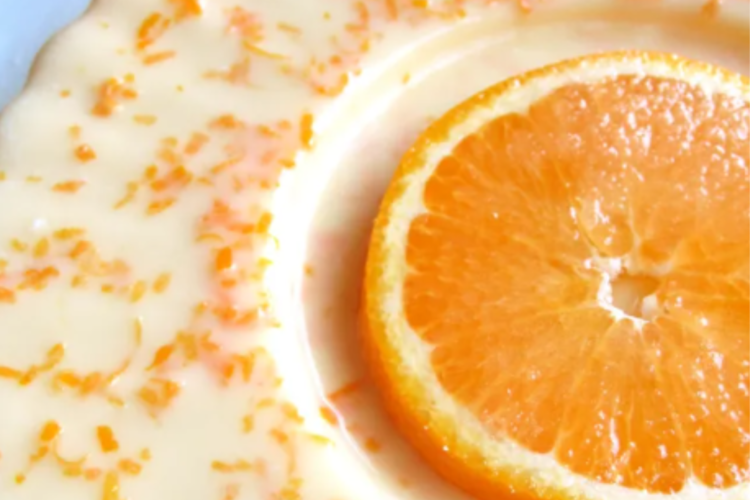
Orange Bavarois – Silky, Citrusy & Elegantly Light
Introduction
Orange Bavarois is a timeless French dessert known for its delicate texture and refined flavor. Falling somewhere between a mousse and a custard, Bavarois (or Bavarian cream) is made with a custard base enriched with gelatin and lightened with whipped cream. The result is a silky, airy dessert that melts effortlessly on the tongue.
This orange version is bright, fragrant, and refreshing—perfect after a rich meal or as a centerpiece for an elegant gathering. With its smooth consistency and vibrant citrus notes, Orange Bavarois delivers both sophistication and comfort in every spoonful.
Ingredients
For the Orange Bavarois
- 500 ml fresh orange juice (about 5–6 oranges, strained)
- Zest of 2 oranges (finely grated)
- 4 large egg yolks
- 120 g granulated sugar
- 250 ml whole milk
- 250 ml heavy cream (cold)
- 10 g powdered gelatin (or 5 gelatin sheets)
- 3 tablespoons cold water (for blooming gelatin)
- 1 teaspoon vanilla extract
- Pinch of salt
Optional Base (Biscuit Layer)
- 100 g crushed digestive biscuits or sponge cake crumbs
- 50 g melted butter
Garnish Ideas
- Orange segments
- Whipped cream rosettes
- Candied orange peel
- Fresh mint leaves
- Orange zest curls
Equipment
- Saucepan
- Whisk
- Mixing bowls
- Fine sieve
- Electric mixer or hand whisk
- Silicone spatula
- Mold or individual ramekins
- Refrigerator space
Step 1: Preparing the Gelatin
Start by blooming the gelatin:
- Sprinkle the powdered gelatin over 3 tablespoons of cold water.
- Let it sit for 5–10 minutes until it absorbs the water and becomes spongy.
If using gelatin sheets:
- Soak them in cold water until softened, then squeeze out excess water before use.
Set aside while you prepare the custard base.
Step 2: Heating the Milk and Orange Infusion
In a saucepan:
- Combine the milk and orange zest.
- Heat gently over medium-low heat until it just begins to steam (do not boil).
This step infuses the milk with fragrant citrus oils, enhancing the final flavor.
Remove from heat and let it steep for a few minutes.
Step 3: Making the Custard Base
In a mixing bowl:
- Whisk the egg yolks with sugar until pale and slightly thickened.
- Add a pinch of salt.
Slowly pour the warm milk into the egg mixture while whisking continuously (this prevents scrambling the eggs).
Return the mixture to the saucepan and cook over low heat:
- Stir constantly with a spatula.
- Cook until it thickens slightly and coats the back of a spoon (around 82–84°C).
Do not let it boil, as this will curdle the eggs.
Step 4: Incorporating the Gelatin
Remove the custard from heat.
Add the bloomed gelatin:
- Stir until fully dissolved.
Then add:
- Fresh orange juice
- Vanilla extract
Mix thoroughly until smooth.
Strain the mixture through a fine sieve into a clean bowl to remove zest and ensure a silky texture.
Let it cool to room temperature, stirring occasionally to prevent a skin from forming.
Step 5: Whipping the Cream
In a separate chilled bowl:
- Whip the heavy cream until soft peaks form.
The cream should be airy but not stiff—this ensures a light, mousse-like texture.
Step 6: Folding Everything Together
Once the orange custard has cooled (but not set):
- Gently fold in the whipped cream using a spatula.
- Work in batches to maintain the airy structure.
Use a light hand—overmixing will deflate the cream and make the Bavarois dense.
Step 7: Preparing the Mold
If using a biscuit base:
- Mix crushed biscuits with melted butter.
- Press into the bottom of your mold.
- Chill for 15–20 minutes until firm.
Then:
- Pour the Bavarois mixture over the base.
- Smooth the top with a spatula.
If not using a base, simply pour into molds or ramekins.
Step 8: Chilling
Refrigerate for at least 4–6 hours, or until fully set.
For best results, chill overnight. The texture will become perfectly smooth and sliceable.
Step 9: Unmolding and Serving
To unmold:
- Dip the mold briefly in warm water.
- Run a knife along the edges if needed.
- Invert onto a serving plate.
Decorate with:
- Fresh orange segments
- Whipped cream
- Candied peel
- Mint leaves
Serve chilled for the best texture and flavor.
Tips for Success
1. Use Fresh Orange Juice
Freshly squeezed juice provides a brighter, more natural flavor compared to store-bought versions.
2. Control the Temperature
Avoid overheating the custard. Gentle heat is key to a smooth texture.
3. Cool Before Folding
If the custard is too warm, it will melt the whipped cream.
4. Don’t Overwhip Cream
Soft peaks are ideal—stiff peaks can make folding difficult.
5. Allow Proper Setting Time
Patience is essential for achieving the perfect consistency.
Flavor Variations
1. Chocolate Orange Bavarois
Add melted dark chocolate to the custard for a rich twist.
2. Blood Orange Version
Use blood oranges for a deeper color and slightly berry-like flavor.
3. Orange Grand Marnier Bavarois
Add a splash of orange liqueur for a more sophisticated dessert.
4. Layered Bavarois
Combine with vanilla or chocolate layers for a stunning visual effect.
Nutritional Highlights
While indulgent, Orange Bavarois offers:
- Vitamin C from fresh oranges
- Calcium from milk and cream
- Moderate sweetness compared to heavier desserts
Enjoy in moderation as part of a balanced diet.
Final Thoughts
Orange Bavarois is the embodiment of elegance in dessert form. Its silky texture, airy structure, and vibrant citrus flavor make it a standout choice for special occasions or refined everyday indulgence.
Though it may seem complex, the process is straightforward when broken into steps. With attention to detail and a bit of patience, you can create a dessert that rivals those found in fine French patisseries.