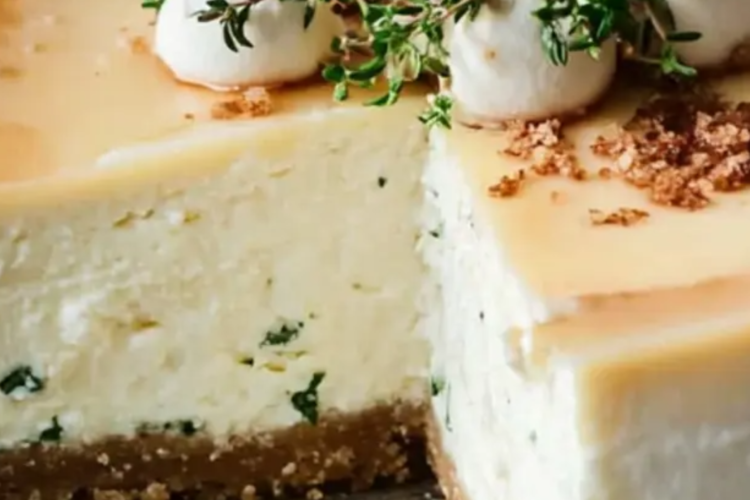
Decadent Goat’s Cheese, Honey and Thyme Cheesecake Delight
Introduction
If you’re looking to impress guests or simply treat yourself to something extraordinary, this Goat’s Cheese, Honey, and Thyme Cheesecake is a perfect choice. Unlike traditional cheesecakes that rely heavily on cream cheese and sugar, this version introduces the complex tang of goat’s cheese, the floral sweetness of honey, and the earthy aroma of fresh thyme.
The result? A refined dessert that feels both rustic and elegant—perfect for dinner parties, holidays, or whenever you want to elevate your baking game.
Ingredients
For the crust:
- 200 g digestive biscuits (or graham crackers)
- 100 g unsalted butter, melted
- 2 tablespoons honey
- 1 teaspoon fresh thyme leaves (finely chopped)
- Pinch of salt
For the filling:
- 400 g soft goat’s cheese (room temperature)
- 300 g cream cheese (room temperature)
- 150 ml heavy cream
- 120 ml honey (plus extra for drizzling)
- 3 large eggs
- 1 teaspoon vanilla extract
- 1 tablespoon fresh thyme leaves
- Zest of 1 lemon
- Pinch of salt
For the topping (optional but recommended):
- Extra honey for drizzling
- Fresh thyme sprigs
- Crushed walnuts or pecans
- A few thin slices of fresh figs or pears
Equipment
- 20–23 cm (8–9 inch) springform pan
- Mixing bowls
- Electric mixer or whisk
- Rubber spatula
- Baking tray (for water bath)
- Aluminum foil
Step-by-Step Instructions
Step 1: Prepare the Crust
Start by preheating your oven to 180°C (350°F).
Crush the digestive biscuits into fine crumbs using a food processor or by placing them in a sealed bag and rolling over them with a rolling pin. Transfer the crumbs into a mixing bowl.
Add the melted butter, honey, chopped thyme, and a pinch of salt. Mix until the texture resembles wet sand and everything is well combined.
Press the mixture firmly into the base of your springform pan, creating an even layer. Use the back of a spoon or the bottom of a glass to compact it tightly.
Bake the crust for about 10 minutes, then remove it from the oven and let it cool completely. Reduce the oven temperature to 160°C (320°F).
Step 2: Prepare the Filling
In a large mixing bowl, combine the goat’s cheese and cream cheese. Beat until smooth and creamy, ensuring there are no lumps.
Add the honey and mix well. The honey should blend seamlessly into the cheeses, creating a silky texture.
Next, add the eggs one at a time, mixing gently after each addition. Avoid overmixing, as this can introduce too much air and cause cracks during baking.
Pour in the heavy cream, vanilla extract, lemon zest, thyme leaves, and a pinch of salt. Mix until everything is just combined.
Step 3: Assemble the Cheesecake
Wrap the outside of your springform pan with aluminum foil to prevent water from seeping in during the water bath.
Pour the cheesecake filling over the cooled crust and smooth the top with a spatula.
Place the springform pan into a larger baking tray. Carefully pour hot water into the tray until it reaches about halfway up the sides of the cheesecake pan. This water bath helps the cheesecake bake evenly and prevents cracking.
Step 4: Bake the Cheesecake
Bake the cheesecake at 160°C (320°F) for 50–60 minutes.
The center should still have a slight wobble when gently shaken, while the edges should be set.
Turn off the oven, crack the door slightly, and allow the cheesecake to cool inside for about 1 hour. This gradual cooling helps prevent sudden temperature changes that can cause cracks.
Step 5: Chill and Set
Remove the cheesecake from the oven and water bath. Let it cool completely at room temperature, then refrigerate for at least 4 hours—preferably overnight.
Chilling is essential for the cheesecake to fully set and develop its rich flavor.
Step 6: Add Toppings and Serve
Before serving, drizzle the top generously with honey. Sprinkle fresh thyme leaves or place small sprigs for a beautiful presentation.
For added texture and flavor, scatter crushed walnuts or pecans over the top. If you want to make it extra special, add slices of fresh figs or pears.
Slice with a warm knife (dip in hot water and wipe dry) for clean, elegant cuts.
Flavor Profile and Texture
This cheesecake is truly unique:
- Tangy from the goat’s cheese
- Creamy from the cream cheese and cream
- Sweet and floral from the honey
- Earthy and aromatic from the thyme
- Crunchy from the biscuit base
The balance of flavors makes it less sugary than traditional cheesecakes, giving it a more refined, almost gourmet feel.
Tips for Success
- Use room temperature ingredients to ensure a smooth filling.
- Don’t overmix after adding eggs—this helps avoid cracks.
- Always use a water bath for the best texture.
- Let it chill overnight for optimal flavor and firmness.
- Use high-quality honey—it’s a key flavor, so it makes a big difference.
Variations
You can easily customize this cheesecake:
- Replace thyme with rosemary for a stronger herbal note.
- Add a thin layer of fig jam between the crust and filling.
- Use lavender honey for a floral twist.
- Make it savory by reducing the honey and adding a touch of black pepper.
Serving Suggestions
This cheesecake pairs beautifully with:
- A cup of herbal tea
- Light white wines like Sauvignon Blanc
- Fresh fruit salads
- A drizzle of balsamic reduction for a gourmet touch
Storage
Store the cheesecake in the refrigerator, covered, for up to 4 days. You can also freeze it (without toppings) for up to 2 months. Thaw overnight in the fridge before serving.
Final Thoughts
This Decadent Goat’s Cheese, Honey, and Thyme Cheesecake is more than just a dessert—it’s an experience. Each bite offers a harmonious blend of flavors that feel both comforting and luxurious.
Whether you’re hosting a dinner party or simply indulging your love for creative baking, this cheesecake is guaranteed to stand out and leave a lasting impression.