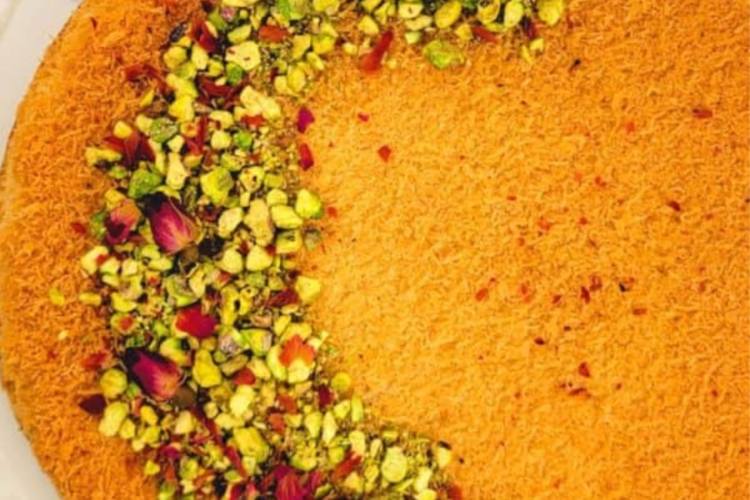
🧀🍯 Lebanese Knafeh (Kanafeh) Recipe
Introduction
Knafeh is one of the most beloved desserts across the Middle East, and the Lebanese version is particularly famous for its perfect balance of textures and flavors. This iconic sweet combines crispy, buttery pastry with a soft, stretchy cheese filling, all soaked in fragrant sugar syrup infused with orange blossom or rose water.
Often served warm, Knafeh is a centerpiece dessert at celebrations, family gatherings, and special occasions. In Lebanon, it is also enjoyed as a breakfast treat—sometimes tucked into sesame bread for a decadent morning sandwich. Its golden crust, gooey interior, and aromatic syrup make it truly unforgettable.
Ingredients
For the Knafeh Base:
- 500 g kataifi (shredded phyllo dough)
- 200 g unsalted butter (melted)
- 2 tablespoons sugar
- A few drops of orange food coloring (optional)
For the Cheese Filling:
- 400 g Akkawi cheese (or mozzarella as a substitute)
- 200 g ricotta cheese
- 2 tablespoons sugar
For the Sugar Syrup (Atar):
- 2 cups sugar
- 1 cup water
- 1 teaspoon lemon juice
- 1 tablespoon orange blossom water (or rose water)
For Garnish:
- Crushed pistachios
- Optional: a drizzle of extra syrup
Understanding the Ingredients
Kataifi Dough
Kataifi is a shredded form of phyllo pastry that becomes crispy when baked. It forms the signature golden crust of Knafeh.
Cheese
Traditional Lebanese Knafeh uses Akkawi cheese, which is mild and slightly salty. It is often soaked in water beforehand to remove excess salt. Mozzarella is commonly used as a substitute because of its meltability and stretch.
Sugar Syrup
The syrup, also known as “atar,” is essential. It adds sweetness and aroma, especially with the addition of orange blossom water, which gives Knafeh its distinctive Middle Eastern fragrance.
Step-by-Step Instructions
Step 1: Prepare the Sugar Syrup
Start by making the syrup so it has time to cool.
In a saucepan, combine sugar and water. Bring to a boil over medium heat, stirring until the sugar dissolves. Add the lemon juice and let it simmer for about 8–10 minutes until slightly thickened.
Remove from heat and stir in the orange blossom water. Set aside to cool completely.
Step 2: Prepare the Cheese
If using Akkawi cheese, slice it and soak it in water for at least 1–2 hours, changing the water occasionally to reduce saltiness. Drain well and pat dry.
Mix the Akkawi (or mozzarella) with ricotta and sugar in a bowl. Set aside.
Step 3: Prepare the Kataifi Dough
Take the kataifi dough and gently separate the strands using your fingers. This step is important to ensure even texture.
Place the dough in a large bowl and pour the melted butter over it. Add sugar and a few drops of food coloring if desired. Mix thoroughly until all strands are coated evenly.
Step 4: Assemble the Knafeh
Preheat your oven to 180°C (350°F).
Grease a round baking dish with butter. Press half of the kataifi mixture firmly into the bottom of the dish to create an even base.
Spread the cheese mixture evenly over the base, leaving a small border around the edges.
Cover with the remaining kataifi dough, pressing gently to form the top layer.
Step 5: Bake
Place the dish in the preheated oven and bake for about 35–40 minutes, or until the top is golden brown and crispy.
For an extra crispy finish, you can place it under the broiler for a few minutes at the end—but watch carefully to avoid burning.
Step 6: Add the Syrup
Remove the Knafeh from the oven and immediately pour the cooled sugar syrup evenly over the hot pastry.
You will hear a satisfying sizzle as the syrup soaks in.
Step 7: Garnish and Serve
Sprinkle crushed pistachios generously over the top. Let the Knafeh rest for a few minutes before slicing.
Serve warm for the best texture—crispy on the outside and gooey on the inside.
Serving Suggestions
Knafeh is best enjoyed fresh and warm. It pairs beautifully with:
- Arabic coffee
- Mint tea
- A scoop of vanilla ice cream for a modern twist
In Lebanon, it is sometimes served inside a sesame bread roll, creating a sweet and savory sandwich that’s incredibly satisfying.
Variations
Soft Knafeh (Knafeh Naameh)
Instead of shredded kataifi, semolina dough is used for a smoother texture.
Cream-Filled Knafeh
Replace cheese with ashta (a Middle Eastern clotted cream) for a lighter filling.
Nut-Filled Knafeh
Add a layer of crushed nuts such as pistachios or walnuts for extra crunch.
Tips for Perfect Knafeh
- Balance the syrup: Too much syrup can make it soggy; too little can make it dry
- Use good-quality cheese: This affects both taste and texture
- Press firmly: Compact layers help the Knafeh hold together when sliced
- Serve immediately: It tastes best fresh out of the oven
- Adjust sweetness: Lebanese Knafeh is typically less sweet than some other versions
Storage
If you have leftovers:
- Store in the refrigerator for up to 3 days
- Reheat in the oven to restore crispiness (avoid microwave if possible)
Why You’ll Love This Recipe
Lebanese Knafeh is a perfect harmony of textures and flavors:
- Crispy, buttery pastry
- Soft, stretchy cheese
- Fragrant, sweet syrup
- Crunchy pistachio topping
It’s a dessert that feels luxurious yet comforting, simple yet impressive.
Final Thoughts
Making Knafeh at home may seem intimidating at first, but with a little patience and the right ingredients, it becomes a rewarding and enjoyable experience. The smell of butter, sugar, and orange blossom filling your kitchen is reason enough to try it.
Whether you’re preparing it for a celebration or simply to explore new flavors, Lebanese Knafeh is sure to leave a lasting impression. Once you taste that first bite—crispy, gooey, and sweet—you’ll understand why this dessert has been cherished for generations.