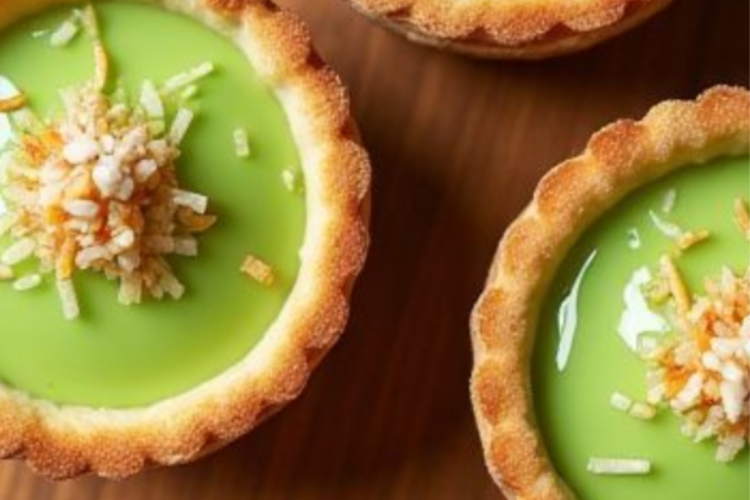
Thai Pandan Coconut Tarts Recipe
Introduction
Thai Pandan Coconut Tarts are a delightful fusion of buttery pastry and a silky, aromatic filling infused with pandan and coconut. Pandan, often called the “vanilla of Southeast Asia,” gives these tarts their signature green color and a unique, sweet, grassy fragrance. Combined with creamy coconut milk, the result is a dessert that is both exotic and comforting.
These tarts are popular in Thai bakeries and street markets, where their vibrant color and irresistible aroma draw people in. While they may look elegant and complex, they can be recreated at home with a bit of patience and the right technique.
Ingredients
For the Tart Shells
- 250 g all-purpose flour
- 125 g cold butter (cubed)
- 60 g powdered sugar
- 1 egg yolk
- 2–3 tbsp cold water
- Pinch of salt
For the Pandan Coconut Filling
- 400 ml coconut milk (full fat)
- 100 ml pandan juice (or 1 tsp pandan extract)
- 120 g sugar
- 3 eggs
- 2 tbsp cornstarch
- 1/4 tsp salt
- 1 tsp vanilla extract (optional)
Equipment
- Tart molds or muffin tin
- Mixing bowls
- Rolling pin
- Saucepan
- Whisk
- Fine strainer
- Oven
Step 1: Prepare the Pandan Juice (if using fresh)
If you are using fresh pandan leaves:
- Wash 6–8 pandan leaves thoroughly.
- Cut them into small pieces.
- Blend with about 100 ml of water until smooth.
- Strain through a fine sieve or cheesecloth to extract the juice.
This fresh juice gives a more authentic flavor, but pandan extract works well too.
Step 2: Make the Tart Dough
- In a bowl, mix flour, powdered sugar, and salt.
- Add cold butter cubes and rub them into the flour using your fingertips until the mixture resembles coarse crumbs.
- Add the egg yolk and mix gently.
- Add cold water, one tablespoon at a time, until the dough comes together.
- Form into a ball, flatten slightly, wrap in plastic, and chill in the refrigerator for at least 30 minutes.
Chilling helps relax the gluten and makes the dough easier to handle.
Step 3: Shape and Blind Bake the Tart Shells
- Preheat your oven to 180°C (350°F).
- Roll out the chilled dough on a lightly floured surface to about 3 mm thickness.
- Cut circles and press them into tart molds or a muffin tin.
- Prick the bottoms with a fork to prevent puffing.
- Line with parchment and add baking weights (or dried beans).
- Bake for 10–12 minutes.
- Remove weights and bake for another 5 minutes until lightly golden.
- Let cool completely.
Step 4: Prepare the Pandan Coconut Filling
- In a saucepan, combine coconut milk, pandan juice (or extract), and sugar.
- Heat gently over medium heat until the sugar dissolves—do not boil.
- In a separate bowl, whisk the eggs, cornstarch, and salt until smooth.
- Slowly pour the warm coconut mixture into the eggs while whisking continuously (this prevents scrambling).
- Strain the mixture to ensure a smooth filling.
- Add vanilla extract if desired.
Step 5: Fill and Bake the Tarts
- Pour the pandan coconut filling into the pre-baked tart shells, filling them about 80–90%.
- Reduce oven temperature to 160°C (320°F).
- Bake for 20–25 minutes, or until the filling is just set but still slightly wobbly in the center.
- Remove from oven and let cool at room temperature.
Step 6: Cooling and Setting
As the tarts cool, the filling will firm up into a silky custard texture. For best results:
- Let them cool completely before removing from molds.
- Chill in the refrigerator for 1–2 hours for a firmer texture (optional).
Flavor and Texture
These tarts are a beautiful balance of textures and flavors:
- Crust: Buttery, slightly crisp, and crumbly
- Filling: Smooth, creamy, and lightly gelatinous
- Flavor: Sweet coconut richness with a fragrant pandan aroma
The pandan adds a subtle floral and grassy note that makes these tarts truly unique.
Decoration Ideas
- Sprinkle toasted coconut flakes on top
- Add a small mint leaf for color contrast
- Dust lightly with powdered sugar
- Drizzle with coconut cream
Tips for Success
- Use full-fat coconut milk for the creamiest filling
- Do not overbake: the filling should still jiggle slightly
- Strain the custard for a smooth texture
- Keep the dough cold to avoid shrinking during baking
- Use pandan extract sparingly—too much can taste artificial
Variations
Mini Bite-Sized Tarts
Use smaller molds for party-friendly desserts.
Gluten-Free Version
Substitute the flour with a gluten-free blend for the crust.
Extra Coconut Flavor
Add shredded coconut into the filling for texture.
Chocolate Twist
Add a thin layer of melted chocolate in the crust before filling.
Storage
- Store in the refrigerator for up to 3 days
- Keep in an airtight container to prevent drying
- Serve chilled or slightly at room temperature
Serving Suggestions
These tarts pair beautifully with:
- Jasmine tea
- Thai iced tea
- Coffee or espresso
They are perfect for:
- Afternoon tea
- Special occasions
- Light desserts after a spicy meal
Cultural Note
Pandan is widely used in Southeast Asian desserts, especially in Thailand, Malaysia, and Indonesia. Its natural green color and distinctive aroma make it a beloved ingredient in sweets ranging from cakes to custards.
Conclusion
Thai Pandan Coconut Tarts are a stunning dessert that combines simplicity with exotic flavor. The buttery crust and creamy pandan-infused coconut filling create a harmony that is both elegant and comforting.
While the recipe involves several steps, each one is manageable, and the final result is well worth the effort. Whether you’re exploring new flavors or impressing guests, these tarts are sure to stand out.